

 English
  中文简体
中文简体  عربى
عربى  Español
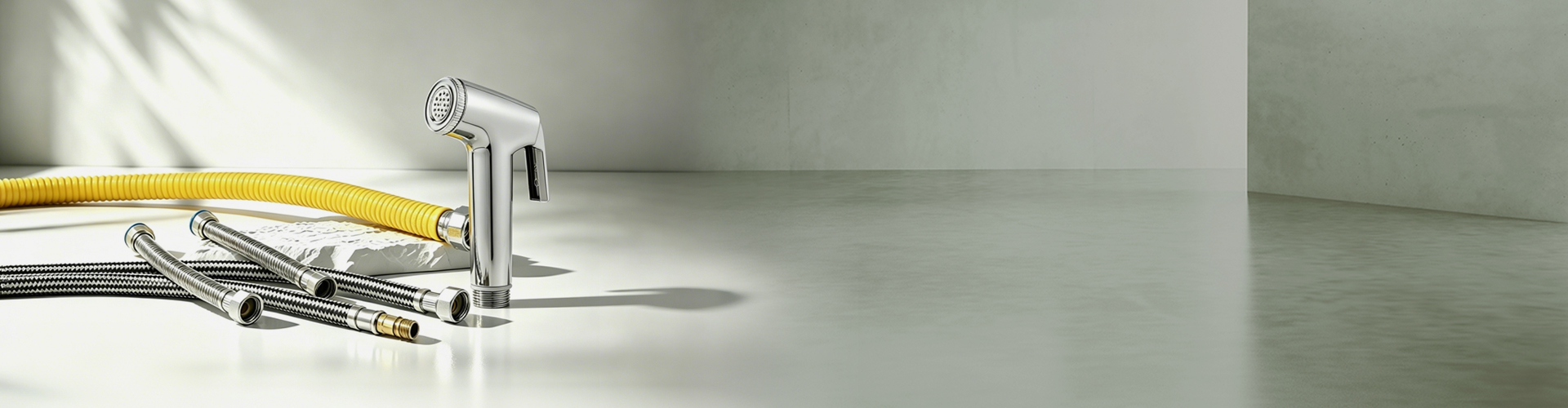
A braided wire hose is a flexible hose wrapped in woven steel wire. It lets pressurized fluid travel through moving, vibrating and awkward spaces where rigid pipe would crack. This guide explains how it is built, why the braid works, which types exist and how to choose one with confidence.
Every machine that moves fluid has the same awkward problem. The fluid needs a sealed path, but the machine around it shakes, rotates, expands with heat and gets bumped by people and tools. A solid steel pipe is strong but unforgiving. A plain rubber tube bends easily but balloons and bursts under serious pressure. The braided wire hose solves the conflict by combining a flexible inner tube with a woven wire sleeve that carries the load.
You will find it under excavators, behind kitchen faucets, inside race-car brake systems, along chemical plant pipe racks and in the engine bay of almost every vehicle on the road. Yet buyers often pick one by diameter and length alone, and then wonder why it leaks, stiffens or bursts early. The sections below walk through the design logic first and the buying decisions second, because the second makes sense only once the first is clear.
What Is a Braided Wire Hose?
A definition, the names you will meet in catalogs, and the standards behind them.
The short definition
A braided wire hose is a flexible fluid-conveying hose in which an inner tube is reinforced by one or more layers of woven (braided) wire, usually carbon steel or stainless steel.
The tube contains the fluid. The braid carries the pressure. The cover, where fitted, shields the assembly from abrasion, oil, weather and heat.
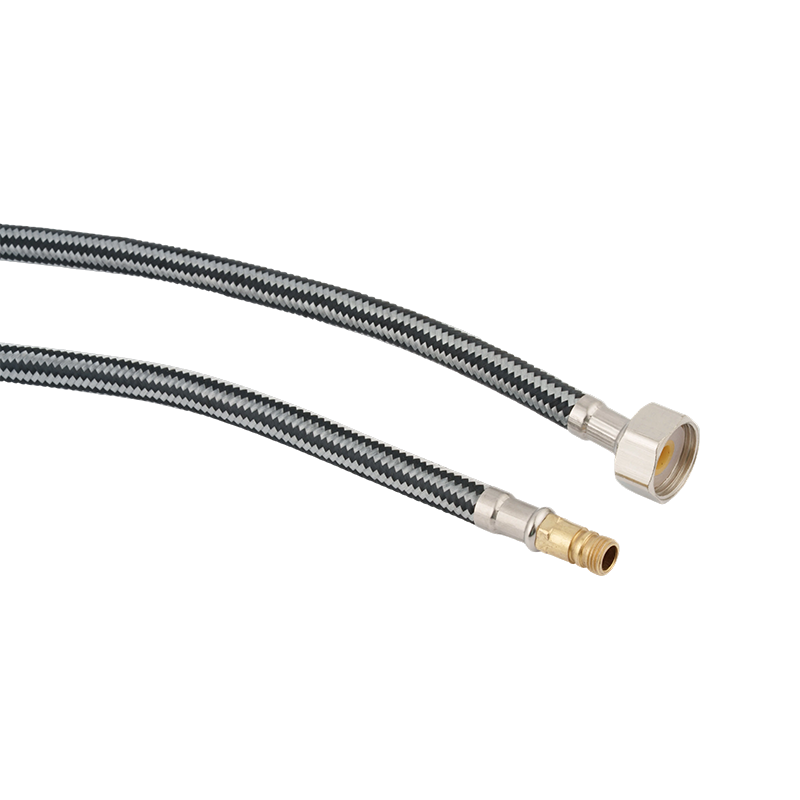
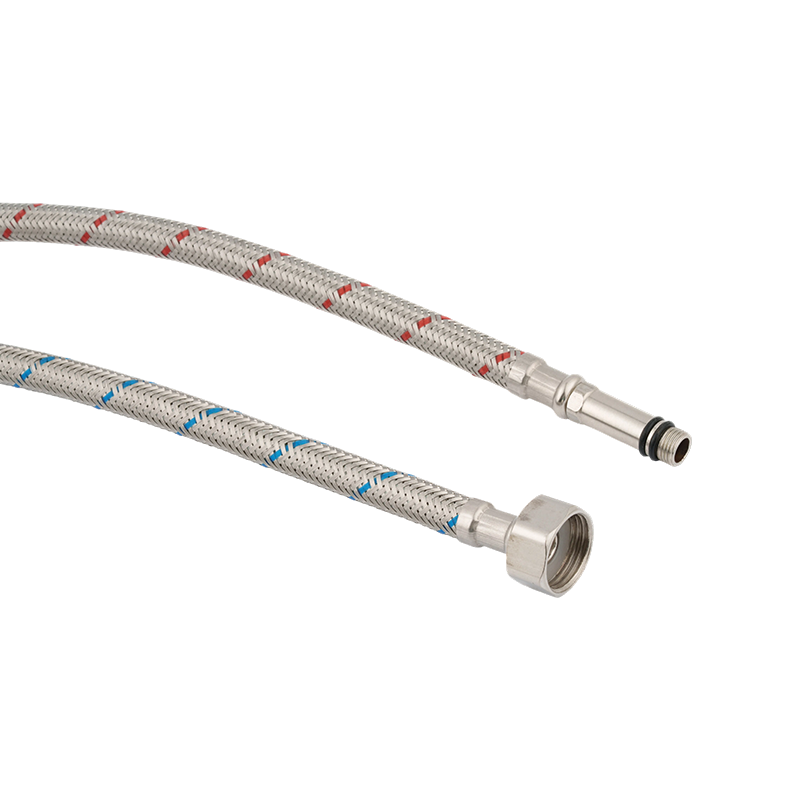
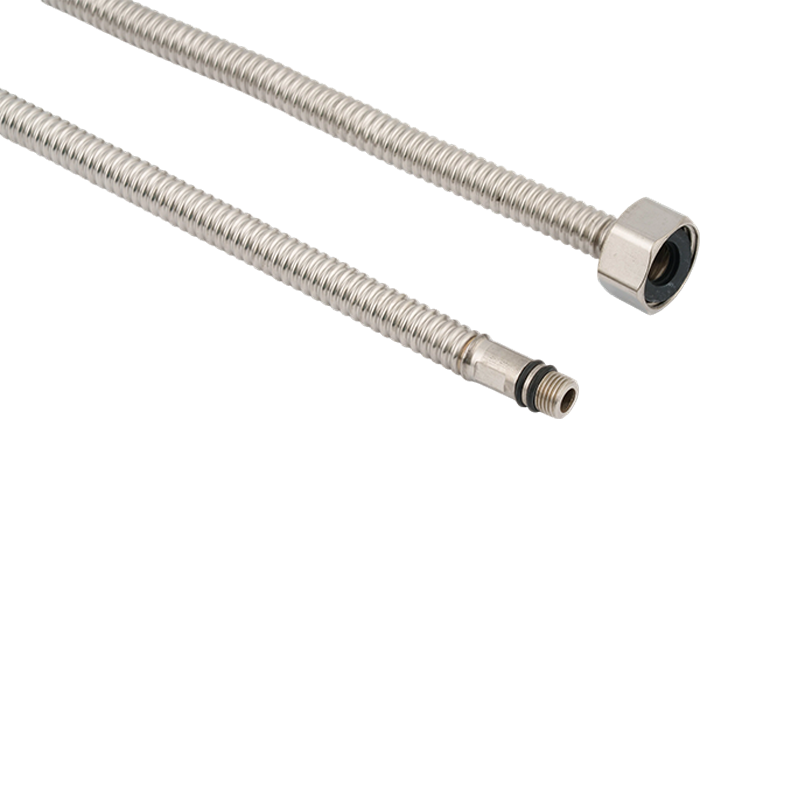
Wire braid hoseSteel braided hoseStainless braided hoseWire-reinforced hoseThe name covers two broad families that share the same idea. The first is the elastomer hose with wire braid reinforcement, such as a rubber or thermoplastic tube wrapped in high-tensile steel wire. This is the classic hydraulic hose. The second is the tube with an external stainless braid, where a PTFE liner or a corrugated stainless tube is protected and strengthened by a woven stainless sleeve. Plumbing connectors, fuel and brake lines, steam lines and chemical transfer hoses belong here.
Before reinforced hoses became common, engineers had two poor choices. Rigid pipe could not tolerate vibration or relative movement between components, and fabric-reinforced hose could not hold high pressure for long. Wire braid raised the pressure ceiling of flexible hose dramatically without giving up flexibility, which is why it spread through mobile machinery, industrial hydraulics and process plants.
Performance is not left to marketing language. Hydraulic wire-braid hose is commonly specified to SAE J517 (for example 100R1 and 100R2), EN 853 (1SN and 2SN) and ISO 1436, which fix dimensions, minimum burst pressure, impulse life and temperature ranges. Stainless braided metal hoses and PTFE hoses follow their own manufacturer, industry and material standards, so always read the datasheet rather than the label alone.
Why a braid at all? A braid is a lattice of wires crossing over and under one another. The wires are strong in tension but free to pivot at the crossings, so the sleeve resists pressure along its wires and still bends smoothly, much like a Chinese finger trap. A solid steel tube of the same strength could not coil around a boom pivot or hook up to a vibrating pump.
Anatomy: Four Parts, One System
Each layer has a single job. A failure in any one of them can take down the whole assembly.
Inner Tube
The tube touches the fluid, so it must resist the medium and its temperature. Nitrile (NBR) suits mineral oils and fuels, EPDM suits water and steam-type media, PTFE handles aggressive chemicals and heat, and stainless corrugated tube covers extreme temperatures. A tube that is wrong for the fluid softens, swells or cracks, and no braid can save it.
Wire Braid Reinforcement
The braid is the load-bearing layer. Rubber hoses use brass-coated high-tensile carbon steel wire so the rubber bonds to it. PTFE and metal hoses use stainless wire, commonly grade 304 or 316, for corrosion resistance. More braid layers, or spiral wire layers, raise pressure capacity and also stiffness and cost.
Outer Cover
On rubber hoses the cover is synthetic rubber or polyurethane that resists abrasion, ozone, weather and oil. It keeps moisture away from the steel wire, which would otherwise rust and lose strength. Stainless-braided hoses often skip a cover because the braid itself is the armor, though some add a sleeve or spring guard for heavy abrasion.
End Fittings
Fittings are crimped, swaged or welded on, and they must grip the braid firmly. Common thread forms include NPT, BSP, JIC, ORFS and flange connections. The fitting is usually the most stressed point, so a quality hose paired with a poor or mismatched fitting is a quality problem waiting to happen.
Between braid layers, multi-layer rubber hoses add thin friction layers so the wires do not rub against each other, and a bonded construction keeps every layer acting together. That detail matters. A hose with two braids that are not properly separated may meet its burst test on day one and wear out its own wires within months of cyclic use.
How the Braid Works: Principles in Five Steps
What happens inside the hose wall from the moment pressure arrives.
Pressure loads the inner tube
Fluid pushes outward on the tube in every direction. On its own, a thin rubber or PTFE tube would balloon and rupture. Its only job is to seal; it was never meant to hold the pressure.
The braid takes the hoop stress
The wires wrapped around the tube go into tension and share the radial load. Because steel wire is far stronger than rubber or PTFE, the wall can stay thin and flexible while the assembly handles high pressure.
The braid angle balances the forces
Pressure pushes a hose both outward and lengthwise. At a lay angle of about 54.7 degrees, known as the neutral angle, the forces cancel and the hose barely grows or shrinks under pressure. Manufacturers tune the angle to keep length change small.
Crossover points let the hose flex
Where wires cross, they can pivot slightly. This lets the hose bend, twist a little and absorb vibration without kinking, as long as you respect the minimum bend radius.
Cover and fittings finish the system
The cover protects the wires from corrosion and abrasion. The crimped fitting clamps the braid, so the pressure force passes through the wires into the coupling instead of pulling the tube out.
Pressure ratings use three numbers that are often confused. Mixing them up is one of the most common selection mistakes.
Remember that these figures are for static, room-temperature conditions. Rapid pressure spikes, called impulses, fatigue the wires far faster than steady pressure does, which is why impulse-tested hoses exist and why a system with a hammering pump deserves a higher-rated hose than its nominal pressure suggests.
Main Types of Braided Wire Hose
Six common constructions and where each one earns its place.
Single and double wire braid rubber hose
The workhorse of hydraulics. A single braid (SAE 100R1, EN 853 1SN) fits medium-pressure lines and return lines, while a double braid (100R2, 2SN) roughly raises capacity for demanding pressure lines. Both are flexible, affordable and available almost everywhere, with typical service from about −40 to 100°C depending on the compound.
Spiral wire hose
Four or six layers of wire wound in spirals rather than braided. They manage very high pressure and punishing impulse cycles, so they appear on excavators, presses and heavy mobile machinery. The price is a stiffer hose with a larger bend radius.
PTFE with stainless braid
A smooth PTFE liner resists nearly all chemicals and up to about 260°C. The braid supplies strength.
Silicone and high-temp automotive hose
Used in coolant, turbo and intake lines where heat and vibration meet.
Stainless corrugated metal hose
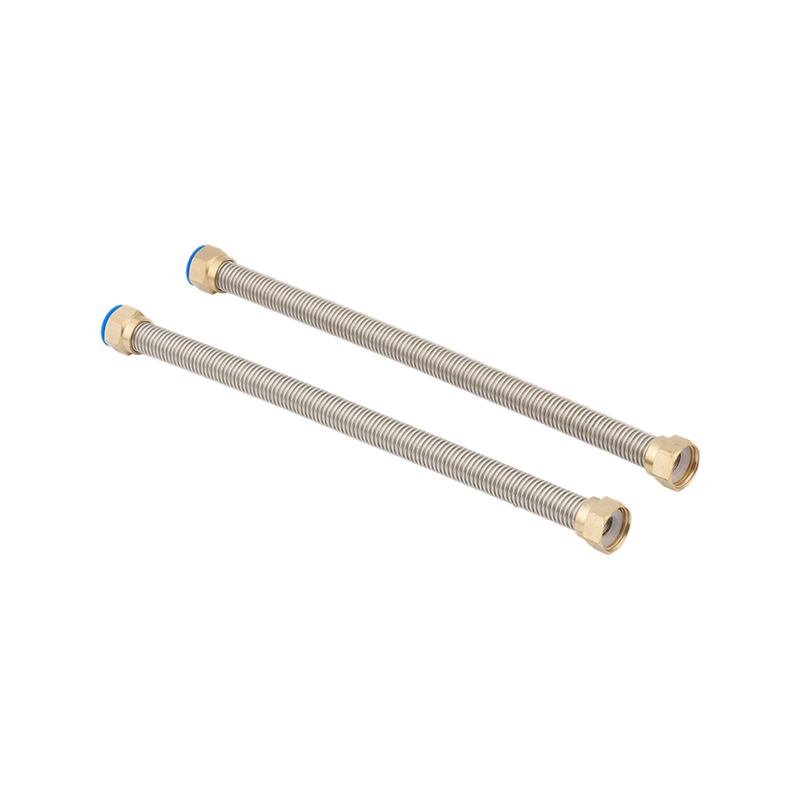
A convoluted stainless tube covered by one or two stainless braids. It seals gases, steam and cryogenic liquids that no polymer can survive, and it also isolates vibration and absorbs thermal movement in piping.
EPDM with stainless braid (plumbing)
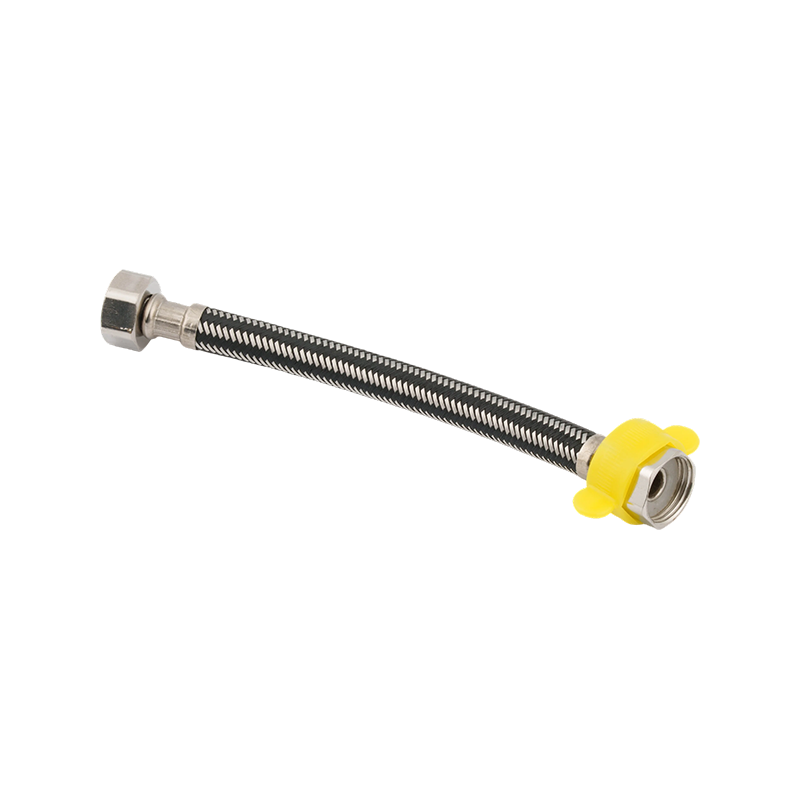
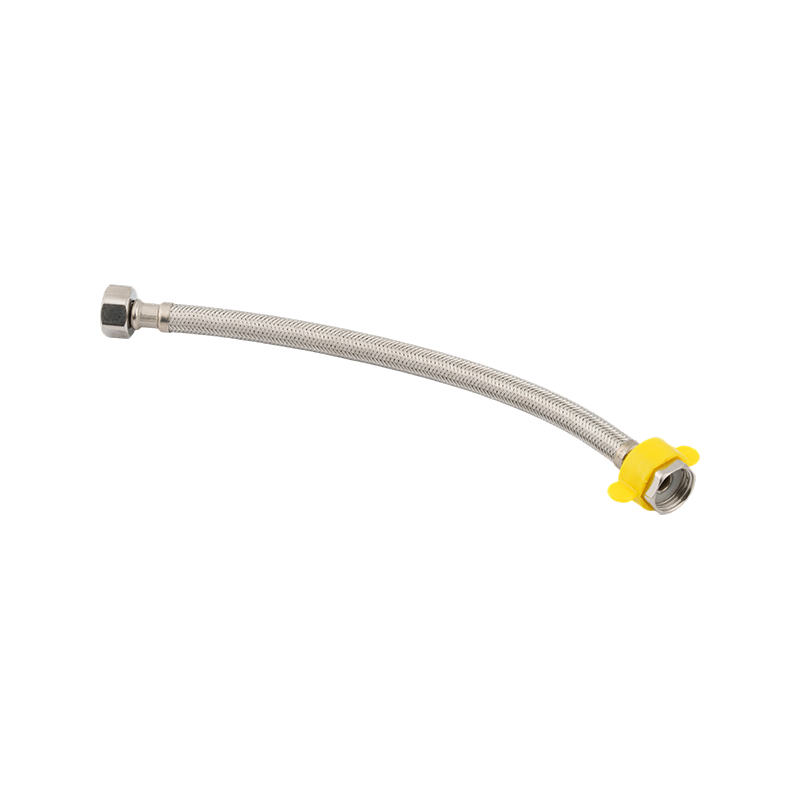
The faucet, toilet and water-heater connector found in homes. Low pressure, easy to fit, and the braid prevents the inner tube from bulging or bursting at the connection.
Performance by the Numbers
Typical pressure and temperature capability of each construction, compared on the same scale.
Typical working pressure
Typical maximum service temperature
The charts show indicative values to compare construction types. Real ratings vary by size, manufacturer and compound, so always confirm them on the datasheet of the exact hose you plan to buy.
Two lessons stand out. First, higher pressure does not simply mean a better hose. Spiral rubber hose out-muscles PTFE on pressure, but PTFE out-performs it on temperature and chemical resistance. Second, ratings fall as conditions get harder. A PTFE hose loses a good share of its pressure rating as it nears its upper temperature limit, and hose pulled below its minimum bend radius loses both flow and fatigue life. Treat the headline figure as the starting point of the calculation, not the end of it.
Where Braided Wire Hose Is Used
Wherever fluid has to pass through motion, heat or vibration.
Construction and mobile equipment
Excavators, loaders, cranes and agricultural machinery run on hydraulics. Booms swing, pumps pulse and debris flies, so these machines depend on tough, high-pressure wire-reinforced hose with abrasion-resistant covers.
- Boom, stick and bucket circuits
- Steering and implement lines
Industrial hydraulics
Presses, injection molding machines, machine tools and lifting systems use braided hose to connect pumps, valves and cylinders. Impulse life is the key specification here.
Automotive and motorsport
Braided stainless brake lines resist the swelling of rubber lines under hard braking and give a firmer pedal. Fuel, oil cooler and power steering lines use braid for heat and abrasion resistance.
- PTFE-lined brake and fuel lines
- Oil cooler and turbo feeds
Chemical and process plants
PTFE hose with stainless braid transfers acids, solvents and caustics that would dissolve rubber. Smooth bore lining also helps cleaning and reduces product build-up.
Food, beverage and pharma
Sanitary PTFE or silicone-lined hose with stainless braid meets hygiene needs, handles steam cleaning and avoids taste or odor transfer. Look for the relevant material approvals.
Home plumbing
Faucet, toilet, dishwasher, washing machine and water heater connectors use EPDM tubes with a stainless braid. The braid prevents the soft inner tube from bursting under household water pressure.
- Quick, tool-light installation
- Tolerates small alignment gaps
Steam, HVAC and refrigeration
Corrugated stainless hose with braid absorbs vibration from compressors and pumps and compensates for thermal growth in steam and hot-water piping.
Marine, offshore and cryogenics
Salt spray, long service intervals and extreme temperature demand corrosion-resistant stainless construction. Cryogenic transfer of liquefied gases relies on stainless braided metal hose.
How to Select the Right Hose: Questions and Expert Views
A reliable way to remember the checklist is the STAMPED method: Size, Temperature, Application, Media, Pressure, Ends and Delivery. Each question on the left is paired with the reasoning behind it on the right.
Quick Selection Matrix
Use this table to shortlist a construction, then confirm exact values with the manufacturer.
| Hose type | Pressure level | Temperature range | Flexibility | Best for | Cost |
|---|---|---|---|---|---|
| Single wire braid rubber | Medium to high (about 2,750 psi at ½″) | −40 to 100°C | High | General hydraulics and return lines | $ |
| Double wire braid rubber | High (about 4,000 psi) | −40 to 100°C | Medium to high | Pressure lines in mobile and industrial machines | $$ |
| Four or six wire spiral | Very high (5,000 psi and above) | −40 to 120°C | Lower (stiffer) | Heavy equipment and high-impulse circuits | $$$ |
| PTFE with stainless braid | Medium (about 1,500 psi) | −70 to 260°C | Medium | Chemicals, hot oil, brakes, fuel, food and pharma | $$$ |
| Corrugated metal with stainless braid | Medium (about 1,000 psi) | −196 to 450°C and above | Medium, restricted bend | Steam, cryogenics, high heat, vibration isolation | $$$$ |
| EPDM with stainless braid | Low (domestic water pressure) | Up to about 90°C | High | Faucets, toilets, water heaters, appliances | $ |
Installation, Inspection and Failure Prevention
Most hose failures are installation and maintenance failures. Five habits prevent the majority of them.
Check the part
Confirm the hose, fittings and rating match the specification and look for any transit damage before fitting.
Route with slack
Leave a small amount of slack, since pressure can shorten a hose, and never pull it tight between two fixed points.
Respect the bend radius
Use elbow fittings instead of forcing a tight bend, and keep bends away from the fitting collar.
Avoid twisting
Twist weakens the braid and can unscrew fittings. Use the printed lay line to check for a straight run.
Inspect and replace
Check regularly for leaks, cracks, exposed wire and bulges. Replace a suspect hose instead of repairing it.
Common causes of premature hose failure
- 30% Abrasion and external damage from rubbing, crushing or sharp edges
- 25% Improper installation, including twisting, tight bends and stretched runs
- 20% Pressure spikes and overpressure beyond the hose rating
- 15% Fluid or temperature incompatibility with the tube or cover
- 10% Aging and fitting problems
Illustrative breakdown of common field failure patterns to show relative importance. It is not drawn from a single statistical study.
A few extra rules save money and injuries. Never inspect a pressurized hose with your hand, because a pinhole leak can inject fluid through skin. Record the installation date and replace hoses on a schedule suited to the duty rather than waiting for a failure. Store spare hose in a cool, dark place away from ozone sources, with ends capped and without sharp folds. Finally, do not mix components from different makers unless they are approved for each other, since crimp specifications are validated for specific hose and fitting combinations.
Key Takeaways
A braided wire hose is a system of tube, braid, cover and fittings, each with a defined role. Choose the construction by the fluid, pressure, temperature and movement of your application, not by diameter alone, and treat installation and inspection as part of the product. Get those decisions right and the hose becomes the quiet, dependable part of the machine.
- Match tube material to the fluid first.
- Select by working pressure and impulse life, not burst pressure.
- Protect the braid from abrasion and moisture.
- Install without twist, strain or tight bends.
FAQ
What is a braided wire hose used for?
It carries pressurized liquids and gases through flexible connections. Typical uses include hydraulic lines on construction and agricultural machinery, brake and fuel lines in vehicles, chemical and steam transfer in plants, and water connectors for faucets and appliances.
What is the difference between a braided hose and a spiral hose?
A braided hose weaves wires over and under one another, giving good flexibility and moderate to high pressure ratings. A spiral hose lays wire layers in parallel helical windings, which handles higher pressure and heavier impulses but gives a stiffer hose with a larger bend radius.
Is a stainless steel braided hose better than a rubber hose?
Neither is better in every case. Stainless-braided PTFE or metal hose wins on temperature, chemical resistance and corrosion, while rubber wire-braid hose usually offers higher pressure for the price and more flexibility. The right choice depends on the fluid, temperature, pressure and budget.
How do I read the pressure rating on a braided hose?
Use the working pressure as your limit. Proof pressure is usually twice that value and minimum burst pressure is usually four times, but those are test and safety margins. Also check whether the rating drops at higher temperatures and whether the hose is impulse-rated for pulsating systems.
How long does a braided wire hose last?
Service life depends heavily on pressure cycles, temperature, movement, abrasion and installation quality. Some hoses last many years while others fail within months when twisted or over-bent. Follow the manufacturer's guidance, inspect regularly and replace on a set schedule or at the first sign of wear.
Can a damaged braided hose be repaired?
Exposed or broken wires, bulges, leaks near the fitting and kinks all mean replacement. A reinforced hose that has lost braid integrity can burst without warning, so patching or taping it is not safe for pressurized service.
How do I measure the minimum bend radius?
Check the manufacturer's datasheet, which gives the minimum bend radius measured at the inside of the curve. Stay above that figure, keep a straight length near each fitting, and use angled fittings where the route needs a tighter turn.