Yuyao Shengchuang Pipe Industry Co., Ltd. manufactures flanged metal hose for gas and fluid lines that need a flexible, pressure-tight transition between fixed equipment and rigid pipework. Each assembly is built around a 304 stainless steel corrugated core, a metal wire braid pressure layer and a flanged end connection, produced in our own workshop in Yuyao Jiangnan Plumbing City, Zhejiang. R&D, forming, welding, braiding, assembly, testing and warehousing sit inside one facility, so an assembly leaves production with the dimensional, sealing and fatigue data recorded for its batch.
Founded in 2015, we operate from a 30,000 m² standardized plant with more than 100 people working in production, technology, quality inspection and warehousing. The welding workshop runs more than 40 high-precision automated welding machines alongside an integrated intelligent assembly line that covers pipe forming, welding, wrapping and final assembly. Our core scope is stainless steel gas pipe, gas metal-coated pipe and stainless steel corrugated hose; as a Flanged Metal Hose manufacturer we extend that corrugated-hose capability into larger equipment connections where a bolted flange is the practical interface.
- 30,000 m² self-owned standardized production plant; 100+ production, technical, inspection and warehouse staff
- More than 40 high-precision automated welding machines with an integrated intelligent assembly line
- In-house standardized laboratory: tensile testing machines, swing fatigue testing machines, air tightness testers
- National 3C mandatory safety certification and ISO 9001 quality management system certification across the product line
- Finished goods warehouse dispatching an average of up to 10,000 pieces per day, with regular in-stock orders arranged within 48 hours
Flanged Metal Hose Range for Gas and Fluid Connections
Our flanged range is produced as a complete welded assembly rather than a hose with loose end fittings. The corrugated core is formed from 06Cr19Ni10 (304) chromium-nickel austenitic strip — longitudinally sheared, argon-arc welded, solution treated and hydraulically corrugated — then covered with one or more braid layers and closed with flanges welded to both ends. This construction absorbs vibration, angular misalignment and thermal movement while the braid carries the pressure load.
Assemblies are configured to the customer's drawing or to the working conditions of the line. Bore, overall length, corrugation profile, braid build and flange drilling are set together, because changing one of them moves the pressure capacity, the minimum bend radius and the installed footprint. Where a threaded or fixed-length interface is the better fit, our wider Industrial Hoses family covers corrugated and braided constructions for appliance, panel and skid connections.
| Assembly Element |
What We Produce |
Where It Fits |
| Corrugated core |
304 (06Cr19Ni10) austenitic strip, formed, argon-arc welded, solution treated, hydraulically corrugated |
Gas, water, air, hot water and low-pressure process lines where a flexible metallic core is required |
| Braid layer |
Single or multi-layer metal wire braid; steel-wire or mixed-filament braid depending on pressure and flexibility targets |
Pressure containment and axial load carry; heavier braid coverage for higher working pressure and continuous vibration |
| Flange ends |
Fixed or floating flange, weld-neck style, drilled to the requested bolt pattern and facing |
Connection to pumps, valves, manifolds, burners, headers and equipment nozzles |
| Length and orientation |
Overall length between flange faces to drawing, including short jumper lengths |
Compensating offset, angular misalignment, installation tolerance and thermal growth |
| External protection |
External covering or coating and flange face protection where specified |
Abrasion, condensation, splash exposure and site handling |
How Our Flanged Assemblies Are Built
The corrugated core sets the flexibility and the braid sets the strength. Welding the flange collars to the braid-and-core assembly is the step that decides sealing performance, so those joints are produced on automated welding equipment and inspected before the assembly moves to the next station.
- Core: 304 austenitic stainless steel offers corrosion resistance, formability and a long service life in gas and water service; the hydraulic corrugation process produces a uniform wave profile for predictable bending.
- Braid: wire braid is applied at controlled tension and coverage; braid angle affects how much axial load the assembly can carry under internal pressure.
- End connections: flanges are welded with full penetration at the collar, then faced and checked for flatness and bolt-hole alignment against the specified standard.
- Assembly: the integrated line performs forming, welding, wrapping and assembly in sequence, which reduces manual handling variation between batches.
Application Fit Across Equipment and Process Lines
Flanged metal hose is used where piping is too rigid for the connection it has to make. Typical duties include burner and combustion trains, pump and compressor suctions and discharges, boiler and heater connections, tank and manifold nozzles, skid tie-ins and process lines subject to thermal expansion. Our background in gas pipeline products means gas service — natural gas and liquefied gas appliance and appliance-bank connections — is a natural fit for the same construction.
- Vibration isolation between rotating equipment and fixed pipework
- Offset and misalignment take-up where pipe runs cannot be aligned precisely on site
- Thermal movement compensation in hot water, steam and heating circuits
- Flexible links on gas appliance banks, wall-hung boilers, water heaters and burners
- Air, water and compatible low-pressure chemical transfer where 304 is suitable for the medium
Media compatibility is confirmed before production. We check the medium, concentration, temperature range and whether the line is continuously or intermittently pressurised, because these determine the core material, braid choice and any external protection. For applications where the connection is threaded rather than flanged, a 304 Stainless Steel Corrugated Pipe or a Braided Wire Hose assembly is usually the more efficient specification.
Specifications We Confirm Before Production
The table below summarises the decisions that define a flanged metal hose assembly and how each one is used in our configuration work.
| Specification |
What We Need From the Project |
Effect on the Assembly |
| Nominal bore |
Required flow rate, line size or matching flange size |
Core diameter, braid coverage and stiffness |
| Overall length |
Face-to-face dimension, movement to be absorbed, available installation space |
Number of corrugations, travel capacity and installed bend geometry |
| Pressure and temperature |
Working pressure, test pressure, continuous and peak temperature |
Braid layers, weld schedule and material confirmation |
| Flange standard and facing |
Bolt pattern, pressure class, face type, gasket type and bolt material |
Flange blank selection, collar weld preparation and finished face finish |
| Movement regime |
Vibration amplitude and frequency, thermal cycling, installation angle |
Braid construction, corrugation profile and minimum bend radius |
| Environment and finish |
Indoor or outdoor location, humidity, splash, abrasion contact |
External covering, coating and packing protection |
Pressure, Movement and Fatigue Behaviour
In a braided metal hose, internal pressure produces two loads: hoop stress in the corrugated core and an axial force that tries to pull the flanges apart. The braid carries the axial component, which is why braid coverage and braid angle are matched to the working pressure rather than left at a default. Bending, on the other hand, is carried by the corrugation, so the wave profile and the installed geometry decide how long the assembly survives a cycling duty.
- State whether the assembly moves in service or is installed once and left static — the two cases need different builds.
- Give vibration amplitude and, where known, frequency or stroke rate so we can relate the duty to swing fatigue behaviour.
- Keep the installed bend radius as generous as the space allows; tight bends concentrate stress at the corrugation nearest the flange.
- Avoid torsion. Flanged metal hose is designed to bend and extend, not to be twisted during installation or by flange misalignment.
Flange Interface, Installation and Site Conditions
Flanged ends make the assembly simple to fit, but the joint only seals if the mating faces, gasket and bolt tightening sequence are right. We supply flange-face protection for transport and confirm the drilling and facing against the drawing, so the assembly matches the mating flange on the equipment or pipework.
- Bring the two flanges together without forcing the hose into position; misalignment is corrected by the hose bend, not by bolt tension.
- Tighten bolts in a cross pattern in stages, with the gasket specified for the medium and temperature.
- Support the pipework either side of the assembly so the hose does not carry dead weight.
- Purge and leak-test the line after installation; our air tightness testing covers the assembly, while the site test covers the joint.
- Standard workshop facilities are sufficient for installation; no special utilities are required for the hose itself.
Quality Control and Acceptance Testing
Every production process has dedicated quality control personnel monitoring in real time, under a three-level inspection system: raw material sampling at goods-in, in-process inspection, and full inspection of finished products before dispatch. Records are kept for each batch so that assemblies of the same specification perform consistently from one delivery to the next.
| Inspection Stage |
Equipment or Method |
What It Confirms |
| Incoming material sampling |
Warehouse sampling and laboratory checks on strip and braid |
Material grade and condition before production begins |
| In-process inspection |
Dedicated inspectors at forming, welding, braiding and assembly stations |
Weld geometry, braid coverage, corrugation form and dimensions |
| Weld strength |
Tensile testing machine |
Integrity of core and flange-collar joints |
| Bending life |
Swing fatigue testing machine |
Corrugation and braid endurance under repeated movement |
| Pressure sealing |
Air tightness tester |
Leak-tightness of the core, welds and end connections |
| Finished goods inspection |
100% inspection before leaving the factory |
Batch conformity, appearance, length and marking |
Our product line holds national 3C mandatory safety certification and ISO 9001 quality management system certification, and we have accumulated multiple domestic and international utility model and invention patents through continuous work on gas pipeline safety, structural improvement and new material application.
Information We Use to Configure Your Solution
A quotation is prepared from the working point of the line, not from a catalogue number alone. The following inputs let us fix the build, the end connections and the test scope without a round of guesswork.
- Medium, concentration and whether the service is continuous or intermittent
- Nominal bore, flange size and the mating flange standard, pressure class and facing
- Overall length between flange faces, plus any tolerance or installation clearance
- Working pressure, system test pressure, and continuous and peak temperatures
- Movement data: static installation, vibration amplitude and frequency, thermal expansion, expected cycles
- Installation orientation, available space and minimum bend radius the layout permits
- Quantity, delivery schedule, and whether partial or phased shipments are required
- Any documentation, marking, packing or inspection requirement attached to the order
Where a drawing or sample exists, we work from it and confirm the critical dimensions back before production. For new duties, our R&D team adjusts pipe specifications, lengths and connector styles to match the requirement, including the development of differentiated variants.
Stock, Custom Work and Delivery Planning
The finished goods storage center holds regular specifications throughout the year and dispatches an average of up to 10,000 pieces per day, with regular in-stock orders arranged for shipment within 48 hours. Urgent engineering and replenishment orders are handled by a customer service team available online 7 × 16 hours, who can coordinate capacity and prioritise scheduling. Custom lengths, bore sizes, braid builds and flange configurations are produced to order.
Assemblies are supplied with the batch inspection records that correspond to the order, so the receiving inspection can be matched against the test data for welds, bending and sealing. Packing, marking and delivery scope are fixed together with the order confirmation.
Frequently Asked Questions
What is a flanged metal hose used for?
It connects fixed pipework or equipment that cannot be rigidly joined — pumps, compressors, burners, boilers, headers and tanks — and absorbs vibration, offset and thermal movement while containing internal pressure. The 304 stainless steel corrugated core provides flexibility; the metal wire braid carries the pressure load.
Which materials do you use for the core and the braid?
The corrugated core is formed from 06Cr19Ni10 (304) austenitic stainless steel strip, argon-arc welded, solution treated and hydraulically corrugated. Braid is applied in single or multiple layers of metal wire, with steel-wire or mixed-filament construction selected according to pressure, flexibility and the movement expected in service.
How is the flange standard decided?
You give us the mating flange standard, pressure class, face type and bolt pattern, or send the drawing. We then machine and drill the flange ends to match, including fixed or floating flange arrangements where installation space requires them. Gasket and bolt specification for the joint are confirmed at the same time.
Can you produce custom bore sizes and lengths?
Yes. Bore, overall length, corrugation profile, braid build and end connections are all configured to the project, and our R&D team supports custom development of pipe specifications, lengths and connector styles. Regular specifications are held in stock for faster delivery; non-standard builds are produced to order.
How are flanged metal hose assemblies tested before shipment?
Under our three-level inspection system, raw materials are sampled at goods-in, every production process is monitored by dedicated quality control personnel, and finished products are fully inspected before dispatch. Laboratory equipment includes tensile testing machines for weld strength, swing fatigue testing machines for bending life and air tightness testers for pressure sealing, with records retained per batch.
What information speeds up a quotation?
Medium, bore, flange standard and facing, face-to-face length, working pressure and temperature, movement or vibration data, installation orientation and quantity. With those details we can fix the construction, the end connections and the test scope in one step and return a configured offer rather than a generic price.



 English
 中文简体
 عربى
 Español

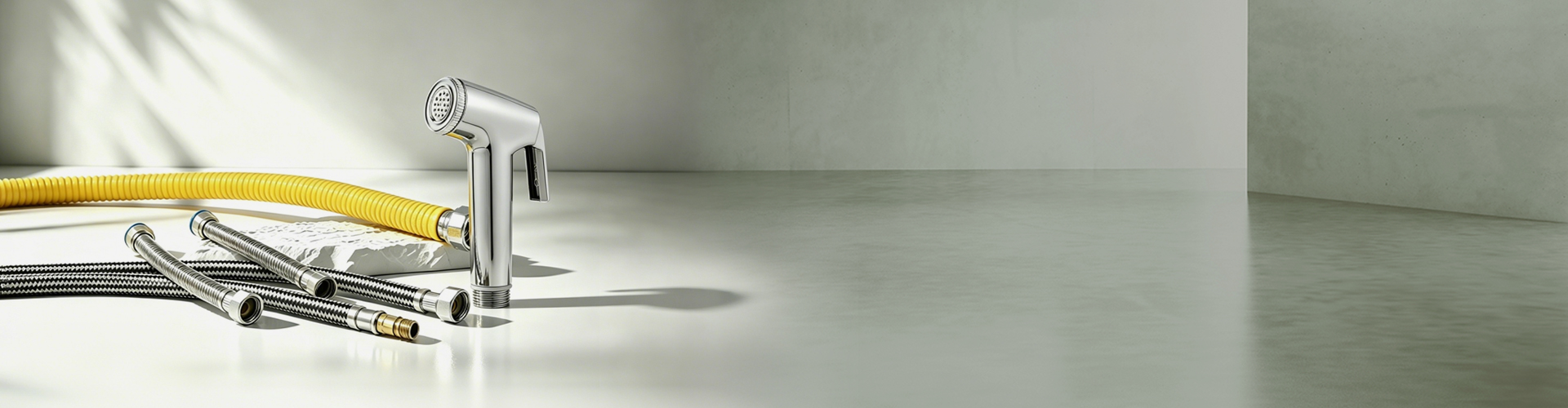



 Wholesale Flanged Metal Hose Manufacturers