The cheapest batch is rarely the cheapest in the project. A site supervisor once rejected an entire delivery of gas hoses because the threaded ends failed a go/no-go gauge check; re-testing and reordering cost more than the hoses themselves. That is why gas pipe manufacturers should not be evaluated as mere tube suppliers. The supplier controls material, end finishing, sealing, and pressure testing before the product reaches a gas utility, wholesaler, or installer. The practical conclusion is straightforward: inspect the factory’s process before you start comparing prices.
An integrated producer such as Yuyao Shengchuang Pipe Industry Co., Ltd. fits that definition. Its 30,000-square-meter plant covers production, testing, warehousing, and delivery, and the company holds 3C and ISO 9001 certification. The structure matters because accountability stays in one place.
What Gas Pipe Manufacturers Actually Do
Gas pipe manufacturing is a chain of material verification, forming, fitting, and proof testing. In a stainless steel line, that means uncoiling tube, cutting to length, corrugating or braiding the structure, attaching threaded or plug-type ends, cleaning, pressure testing, and packing. Each step leaves evidence in the finished product.
The most telling step is the transition from pipe to appliance. A threaded gas hose depends on precise thread geometry, clean plating, and a sealing face that stays flat after assembly. A manufacturer will cut threads on dedicated machines and check them with calibration gauges; an assembler who buys loose fittings cannot easily trace a rejected batch back to a single cause.
Scale also has a safety benefit. A plant running continuously develops process data: rejection rates, gauge readings, and leak-test records. In the Yuyao Shengchuang facility, more than 100 employees handle production, technical support, and quality control, with a standardized laboratory used for incoming material and finished-goods checks.
Gas Pipe Materials: Which Type Fits Which Link
Most searches for gas pipe manufacturers assume one pipe material fits an entire network. In practice, gas systems use at least two families: polyethylene (PE) for buried distribution mains, and metallic pipe for building-side connections, appliance hookups, and industrial lines.
PE pipe is valued for fusion-welded joints and corrosion resistance underground. Metallic gas pipe, usually stainless steel, is preferred where space is tight, the line must flex, or the connection must survive heat near an appliance. The right choice depends on pressure, installation environment, and joint type.
Gas pipe materials should be selected by network position, not by habit.
| Pipe type |
Usual position |
What to verify |
| Polyethylene (PE) pipe |
Buried distribution networks |
Fusion-weld quality, pressure rating, material grade |
| Stainless steel corrugated pipe |
Indoor appliance hookups and flexible risers |
Corrosion resistance, forming consistency, fitting seal |
| Stainless steel braided hose |
High-pressure or moving connections |
Braiding density, liner condition, thread protection |
| Flanged metal hose |
Industrial equipment connections |
Flange facing, weld soundness, movement allowance |
For standard cookers and water heaters, the fixed-length double-threaded hose is one of the most common SKUs; both ends are metal threads and the length is fixed by national-standard packaging. This product is the most relevant option for kitchen and utility-room installations.
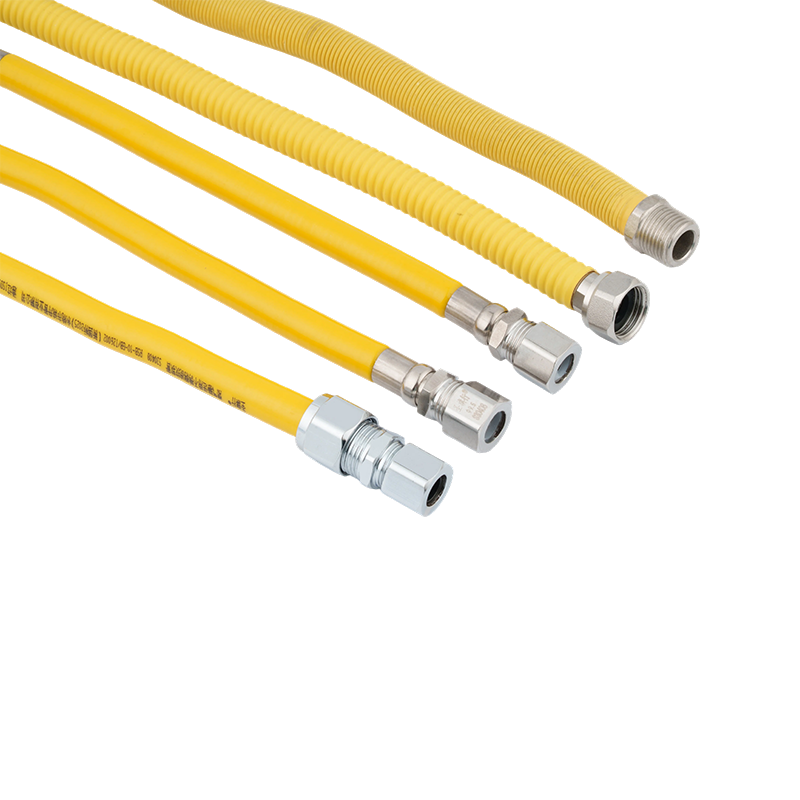 National Standard Fixed-Length Double-Threaded Gas HoseDesigned for standard cookers and water heaters, this fixed-length hose features threaded metal ends for reliable kitchen and utility-room gas connections.View Product →
Five Checks That Separate Reliable Gas Pipe Manufacturers
After visiting plants and reviewing supplier audits, we group the due diligence into five areas. The bar chart below is a practical weighting, not a statistical study: it shows where an auditor usually spends attention before approving a new gas pipe manufacturer.
Material & tube controls
25%
Thread & fitting tolerances
25%
Pressure & leak-test records
20%
Stock & delivery reliability
15%
Material and incoming tube controls
Ask for the stainless steel grade and the certificate that accompanies incoming coils. A manufacturer that documents material from the roll to the finished hose can explain why a batch behaves differently under pressure.
Thread and fitting tolerances
Threaded gas hoses should be checked with ring gauges, not by hand feel. Minor differences in thread depth become leak paths under temperature cycling.
Pressure and leak-test records
In-house testing should cover finished goods, not just sample prototypes. A standardized laboratory is useful only if records are kept per batch.
Batch traceability
If a part fails in the field, the manufacturer should trace it to the raw material lot, production date, and testing record. This is easier when R&D, production, and quality control are in the same building.
Stock and delivery reliability
Standard items should move from a stocked warehouse, not be scheduled for a new run every time. The Yuyao Shengchuang plant, for example, reports a daily warehouse dispatch volume of 10,000 pieces and carries full-line inventory through the year.
Application-Driven Selection: From Cooker Hookups to Industrial Lines
Once the material and process checks are clear, choose a manufacturer by the installation scenario. There is no single best gas pipe for every project.
Residential appliance hookups
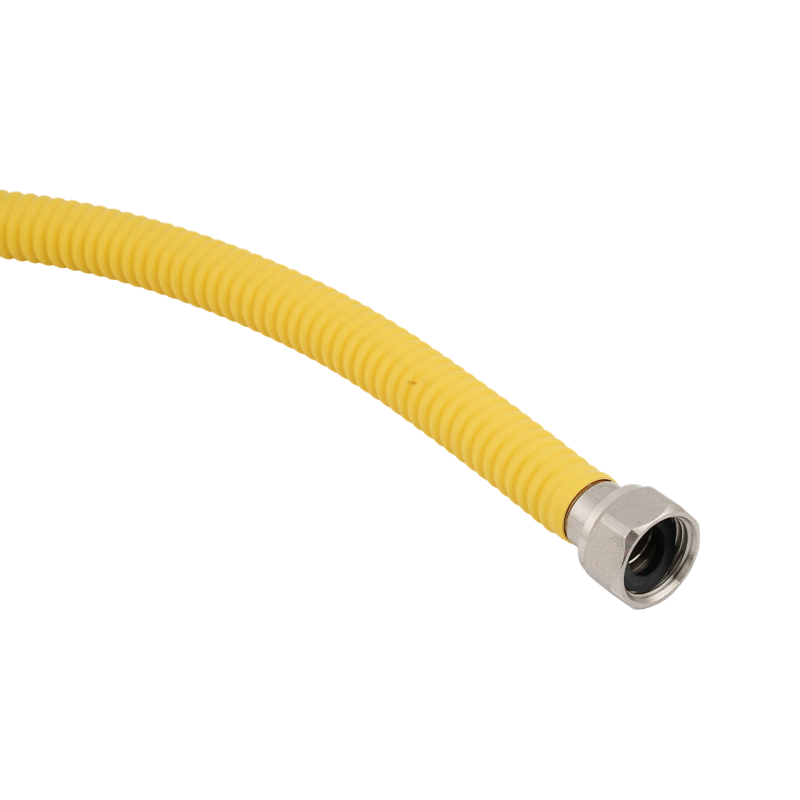
Wall-hung boilers, gas cookers, and water heaters create constant temperature changes and slight physical movement. A corrugated stainless steel flexible hose absorbs vibration while maintaining a stable metal seal. For unusually high vibration or constant flexing, the antivibration version is a stronger choice.
 High-Strength Anti-Vibration Corrugated Flexible HoseThis 304 stainless steel hose absorbs vibration and pressure pulses, with dual O-ring seals for stable, leak-resistant connections in tight spaces.View Product →
Industrial lines and flange connections
Industrial gas pipework often needs a flexible element between rigid pipes, pumps, or metering skids. A flanged metal hose provides a removable connection with a metal sealing face and can accommodate thermal expansion or minor misalignment.
 Flanged Metal Hose for Flexible Pipe TransitionsA customizable flange-ended assembly that compensates for thermal expansion and misalignment in industrial gas and fluid lines, built for demanding applications.View Product →
High-pressure or moving equipment
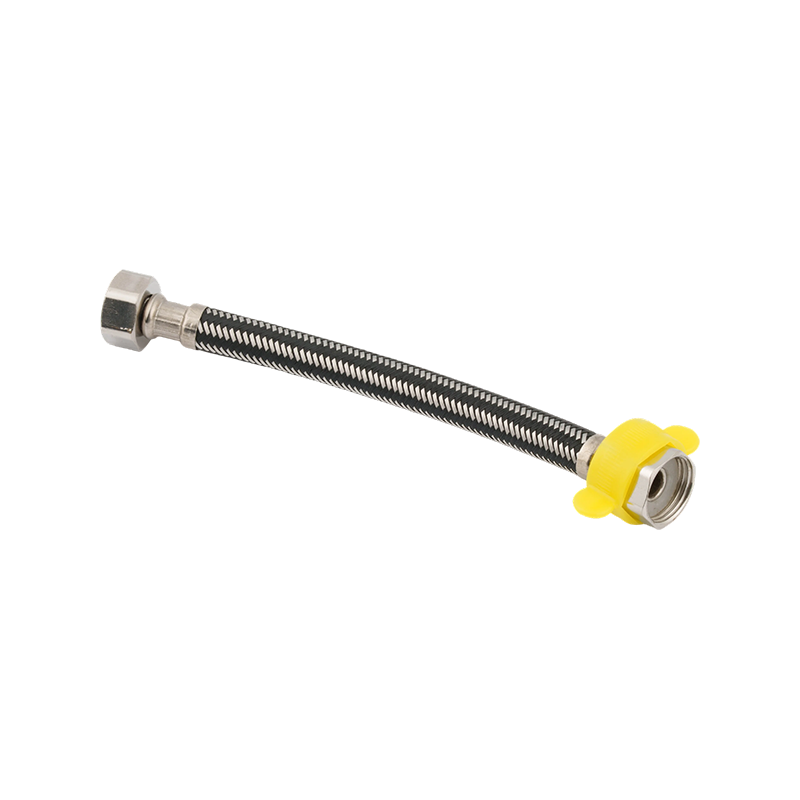
A braided stainless steel hose adds reinforcement around the inner core. Under repeated bending and high working pressures, the braided layer prevents kinking and protects the liner. Buyers should confirm the braid density and the type of end seal before approval.
Red Flags When You Evaluate Gas Pipe Manufacturers
Any of these signs should delay an order until verified:
- No physical factory address or production floor photo that can be checked against the supplier’s legal name.
- Material grade is described as “stainless steel” without a specific grade such as 304.
- The factory cannot show pressure-test or leak-test records for the last batch.
- Threaded ends show burrs, uneven plating, or plating cracks at the thread root.
- Standard SKUs are offered as made-to-order every time, which suggests small, unstable production runs.
- The sales team cannot explain the difference between corrugated, braided, and flanged metal hoses.
Sourcing Starts Inside the Factory
Price conversations should begin after the manufacturing process is verified. Ask for material certificates, confirm the testing procedure, and check whether standard products ship from stock. The more visibility you have into production, the fewer field failures you will have to absorb later.
For projects that need a stable supply of stainless steel gas pipe, corrugated hoses, or flanged metal hoses, contact our team and we will walk you through the same checks we apply on our own production floor.



 English
 中文简体
 عربى
 Español




 Wholesale Flexible Metal Hose Suppliers