Braided hose is used to convey fluids and gases under pressure in applications where a plain rubber or polymer tube would expand, burst, or lose dimensional stability under the working pressure of the system. The braided reinforcement layer — whether made from steel wire, textile yarn, or a combination of both — constrains the inner tube wall against radial expansion under internal pressure, allowing the hose to carry pressures that far exceed the capability of the same inner tube without reinforcement. Across industries, braided hose appears in hydraulic power systems, plumbing supply lines, automotive fuel and cooling systems, industrial chemical transfer lines, gas distribution, food and beverage processing, and medical gas supply — any situation where a flexible connection must handle internal pressure reliably over a defined service life.
The three keyword relevant product categories each serve a distinct performance range: a Steel Wire Braided Hose delivers the highest pressure capacity and is the standard choice for hydraulic and industrial high pressure circuits; a Mixed Filament Braided Hose uses a combination of synthetic and metallic fibers to balance pressure rating, flexibility, and chemical resistance for medium pressure and corrosive fluid applications; and a Braided Wire Hose describes the broad category of wire reinforced hoses used across plumbing, gas, and appliance connection applications where burst resistance, flexibility, and long term leak prevention are the primary performance requirements.
How Braiding Reinforcement Works: The Engineering Principle Behind Braided Hose
Understanding why braided hose outperforms plain hose in pressure applications requires a basic understanding of how internal pressure loads the hose wall. When a fluid or gas is pressurised inside a hose, it exerts a force on the inner wall in all directions simultaneously. The component of this force acting radially outward (perpendicular to the hose axis) creates a hoop stress in the hose wall that stretches the inner tube material. If the hoop stress exceeds the tensile strength of the inner tube material, the tube expands and eventually bursts. A braided reinforcement layer placed over the inner tube intercepts this radial expansion force and redistributes it as tensile load along the braid wires or filaments, which have tensile strengths many times higher than the rubber or polymer inner tube.
The braid angle — the angle at which the reinforcement strands are woven around the tube circumference — determines the balance between the hose's resistance to internal pressure and its flexibility under bending. A braid angle close to 54.7 degrees (the neutral angle for a cylindrical pressure vessel) provides the optimal combination of radial pressure resistance and axial stability. Braid angles above 54.7 degrees produce hoses that elongate under pressure; angles below 54.7 degrees produce hoses that shorten under pressure. Most production braided hoses are manufactured with braid angles between 50 and 58 degrees to balance pressure performance against flexibility in the finished product.
Single Braid vs Double Braid Construction
Braided hose is produced in either single braid (one reinforcement layer over the inner tube) or double braid (two successive reinforcement layers, each at alternating braid angles) construction:
- Single braid: One reinforcement layer providing the primary pressure containment. Standard for low to medium pressure applications up to 20 to 40 bar depending on hose bore size and braid wire or filament specification. Lower wall thickness and greater flexibility than double braid at the same bore size. The majority of plumbing supply hoses, domestic appliance connection hoses, and general purpose flexible connectors use single braid construction, as the working pressure of these systems (typically 3 to 10 bar) is well within the single braid pressure rating.
- Double braid: Two reinforcement layers providing significantly higher burst pressure compared to single braid at the same inner tube diameter. The second braid layer adds both additional pressure capacity and a degree of mechanical protection for the first braid layer against external abrasion and impact. Double braid construction is standard for hydraulic hoses rated above 250 bar, high pressure water jetting hoses, and industrial transfer hoses where the working pressure exceeds the single braid capacity or where added redundancy against braid layer failure is required.
Steel Wire Braided Hose: Highest Pressure Capacity for Hydraulic and Industrial Use
A Steel Wire Braided Hose uses high tensile steel wire as the reinforcement braid material, providing the highest pressure capacity available in the braided hose product family. The steel wire braid constrains the inner tube against radial expansion with a tensile strength that textile and polymer fibers cannot match, enabling Steel Wire Braided Hose products to achieve working pressure ratings of 35 to 420 bar depending on bore size, inner tube compound, and the number of braid layers.
Construction of a Steel Wire Braided Hose
A standard single braid Steel Wire Braided Hose to SAE 100R1 or EN 853 1ST specification consists of three layers:
- Inner tube: An extruded oil resistant synthetic rubber compound (most commonly nitrile rubber, NBR, for hydraulic oil compatibility) or thermoplastic polyester. The inner tube must be compatible with the fluid being conveyed — hydraulic oil, water, air, fuel, or chemical — and must maintain flexibility at the minimum operating temperature of the system. Standard hydraulic hose inner tubes are rated for fluid temperatures from minus 40 degrees Celsius to plus 100 degrees Celsius, with high temperature variants rated to plus 150 degrees Celsius.
- Steel wire braid layer: High tensile steel wire (typically 0.2 to 0.5 mm diameter per strand) is braided over the inner tube in a specified pattern density that determines the pressure rating. EN 853 1ST specification (single steel wire braid) produces a hose rated from 225 bar at 6 mm bore to 90 bar at 25 mm bore. EN 853 2ST (double steel wire braid) achieves ratings from 400 bar at 6 mm bore to 160 bar at 25 mm bore. The wire is typically zinc plated or brass plated to resist corrosion from moisture that may permeate the outer cover during service.
- Outer cover: An abrasion resistant synthetic rubber (most commonly EPDM or CR neoprene) or thermoplastic polyurethane extruded over the braid layer to protect it from mechanical damage, UV degradation, chemical splash, and environmental moisture. The outer cover does not contribute to pressure containment but is critical to the long term integrity of the steel wire braid underneath it.
Working Pressure Ratings for Steel Wire Braided Hose by Standard
| Standard |
Braid Type |
6 mm Bore (bar) |
12 mm Bore (bar) |
25 mm Bore (bar) |
Typical Application |
| SAE 100R1 / EN 853 1ST |
Single steel wire |
225 |
180 |
90 |
General hydraulic systems, construction equipment |
| SAE 100R2 / EN 853 2ST |
Double steel wire |
400 |
330 |
160 |
High pressure hydraulics, mining and heavy machinery |
| SAE 100R17 |
Single wire, compact |
350 |
250 |
140 |
Compact hydraulic circuits, agricultural machinery |
| EN 857 2SC |
Double wire, compact |
420 |
350 |
180 |
Compact high pressure hydraulics, robotics |
Working pressure ratings for Steel Wire Braided Hose by SAE and EN standard, braid configuration, and bore size, with typical application categories
Primary Applications of Steel Wire Braided Hose
The Steel Wire Braided Hose is specified wherever hydraulic or high pressure fluid power is required:
- Mobile hydraulics: Excavators, bulldozers, cranes, agricultural tractors, and forestry equipment all use Steel Wire Braided Hose in their hydraulic circuits connecting pumps, valves, cylinders, and motors. The high working pressures of mobile hydraulic systems (typically 200 to 350 bar) and the dynamic bending loads imposed by articulating machinery make the steel wire braid the only reinforcement type with adequate pressure rating and fatigue life for this demanding application class.
- Industrial hydraulic power units: Press machines, injection moulding machines, test rigs, and factory automation equipment use Steel Wire Braided Hose for flexible connections between rigid piping and moving actuators, allowing relative motion between machine components without transmitting vibration through the rigid circuit.
- High pressure water systems: Water jetting and surface preparation equipment operating at 100 to 500 bar uses Steel Wire Braided Hose or spiral wound wire hose (for the highest pressures) to deliver the water jet from the pump unit to the jetting gun.
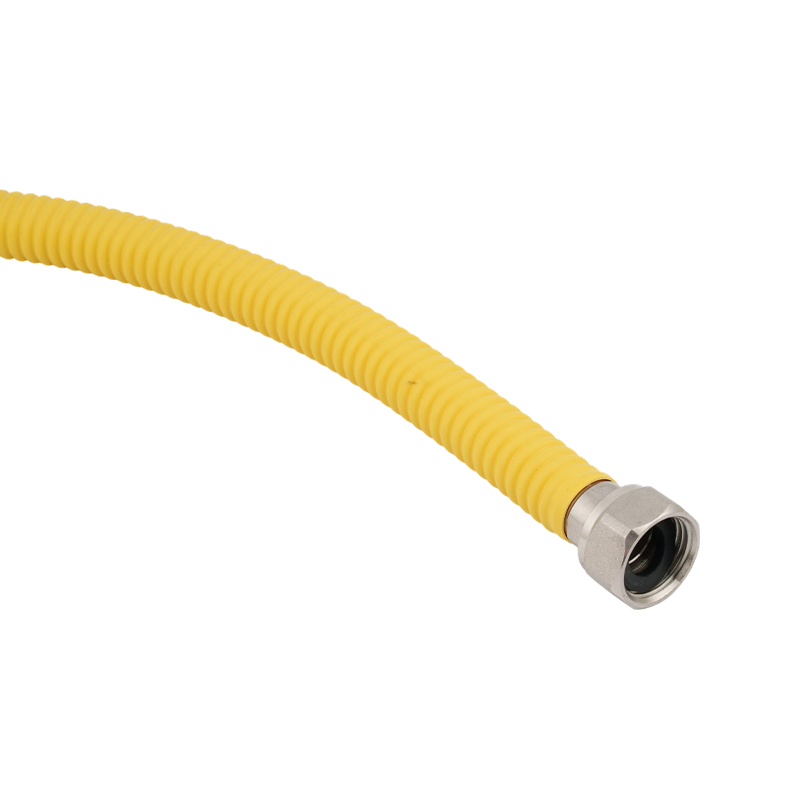
- LPG and natural gas transfer: Steel wire braided rubber hoses to specific gas standards (EN 16436, ISO 3821) are used for LPG cylinder pigtail connections and portable gas appliance supply in applications requiring a flexible connection with burst resistance well above the system working pressure.
Mixed Filament Braided Hose: Balancing Pressure, Flexibility, and Chemical Resistance
A Mixed Filament Braided Hose uses a braided reinforcement layer composed of two or more different fiber types combined in the braid structure — most commonly a combination of synthetic textile fibers (polyester, nylon, or aramid) and metallic filaments (steel wire, stainless steel, or brass plated copper) woven together in alternating or blended strand configurations. This hybrid reinforcement approach allows the hose to achieve a pressure rating and flexibility profile that neither a pure textile braid nor a pure metal wire braid can match for the specific combination of performance requirements in the target application.
Why Combine Fiber Types in a Mixed Filament Braided Hose
Pure textile braid hoses (using only polyester or nylon braid) provide excellent flexibility and chemical resistance but are limited in pressure capacity — typical textile braided hose working pressures reach 10 to 20 bar for standard bore sizes, adequate for water supply, compressed air, and low pressure pneumatic applications but insufficient for hydraulic and medium pressure fluid power circuits.
Pure steel wire braid hoses achieve much higher pressure ratings but sacrifice some flexibility (the steel wire braid is stiffer per unit cross section than textile fibers at equivalent tensile strength) and require a protective outer cover to prevent moisture ingress to the wire braid, as bare steel wire corrodes rapidly in wet environments. In certain applications — medical gas supply tubing, food grade flexible connectors, chemical processing hoses requiring both pressure resistance and full corrosion immunity — the Mixed Filament Braided Hose combining stainless steel filaments with PTFE or polyester synthetic fibers provides the optimal solution that neither pure wire nor pure textile braid can achieve alone.
Common Mixed Filament Braided Hose Configurations
- Stainless steel wire over PTFE liner: The most common Mixed Filament Braided Hose configuration for chemical and high purity fluid applications. An extruded PTFE (polytetrafluoroethylene) inner tube provides universal chemical resistance to virtually all industrial fluids including strong acids, alkalis, solvents, and oxidising agents that would attack rubber or thermoplastic inner tubes. The stainless steel braid over the PTFE liner provides pressure containment and mechanical protection. PTFE lined stainless steel braided hose operates at working pressures of 25 to 100 bar depending on bore size, temperatures from minus 60 to plus 260 degrees Celsius, and in contact with virtually any process fluid including fuming nitric acid, chlorine, and pharmaceutical solvents — a combination of properties unmatched by any single material hose construction.
- Aramid and polyester mixed braid over rubber tube: Used in medium pressure hydraulic and pneumatic applications requiring higher flexibility than steel wire braid at equivalent pressure rating. Aramid fiber (Kevlar and equivalents) has a tensile strength of approximately 3,600 MPa, comparable to high tensile steel wire but at one fifth the density, producing a braid layer that achieves pressure ratings of 40 to 80 bar for standard bore sizes while remaining significantly more flexible and lighter than steel wire braid at the same pressure capacity.
- Copper or brass filament mixed with nylon braid: Used in domestic appliance connection hoses (washing machine inlet hoses, dishwasher supply hoses, gas appliance flexible connectors) where the metal filament component adds burst resistance and the nylon component contributes flexibility and resistance to abrasion from the hose moving against cabinet edges and floor surfaces during appliance installation and use.
Applications Where Mixed Filament Braided Hose Is Specified
- Pharmaceutical and food processing: PTFE lined stainless steel Mixed Filament Braided Hose assemblies used for transferring active pharmaceutical ingredients, cleaning solutions, and food grade process fluids where contamination of the fluid by the hose material is not acceptable and steam sterilisation of the assembly is required between batches.
- Chemical plant and laboratory: Corrosive chemical transfer between reactors, storage vessels, and processing equipment where the chemical resistance of the PTFE liner and the corrosion immunity of the stainless steel braid are both required simultaneously.
- Cryogenic service: PTFE liner with stainless steel braid maintains flexibility and pressure capacity at liquid nitrogen temperatures (minus 196 degrees Celsius) where rubber and most thermoplastic hose materials become brittle and fail catastrophically under flexing.
- Hydraulic systems in corrosive environments: Offshore marine hydraulics, chemical plant actuator circuits, and food processing machinery where the outer surface of the hose must resist corrosive washdown chemicals that would attack standard rubber covered steel wire braid hoses.
Braided Wire Hose in Plumbing and Appliance Connection Applications
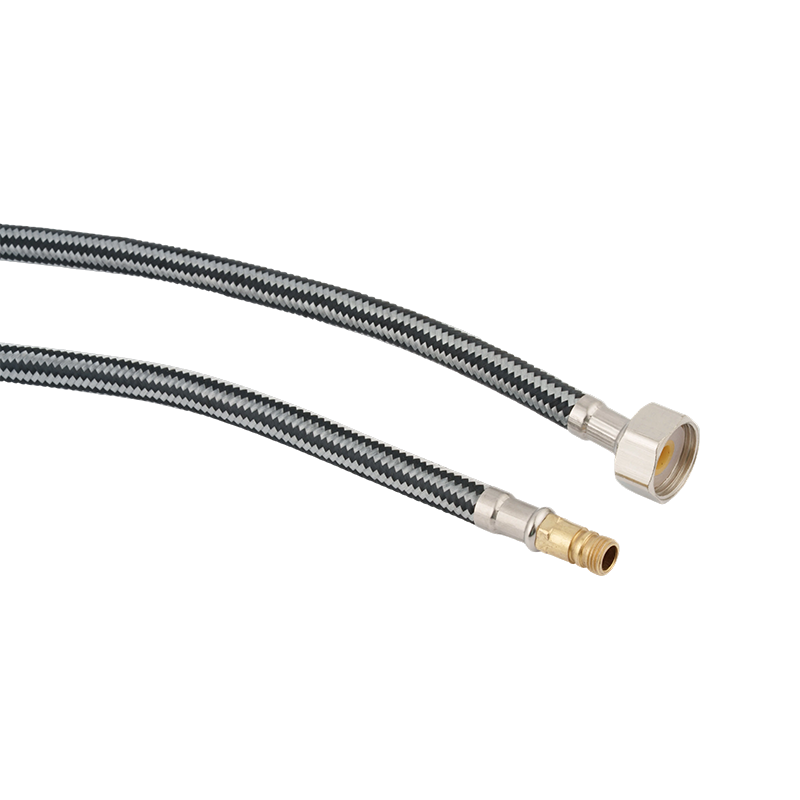
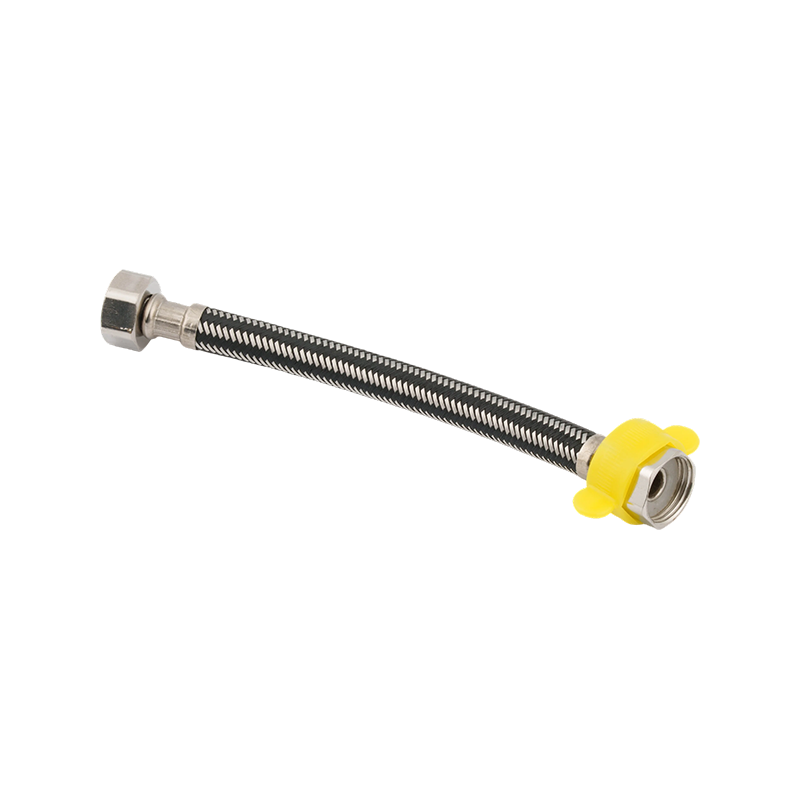
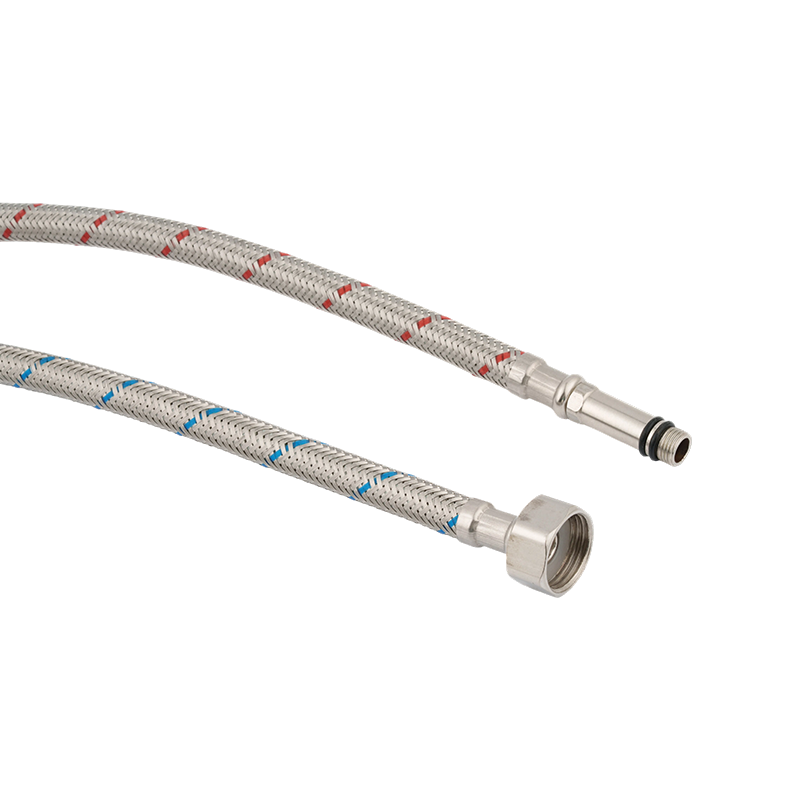
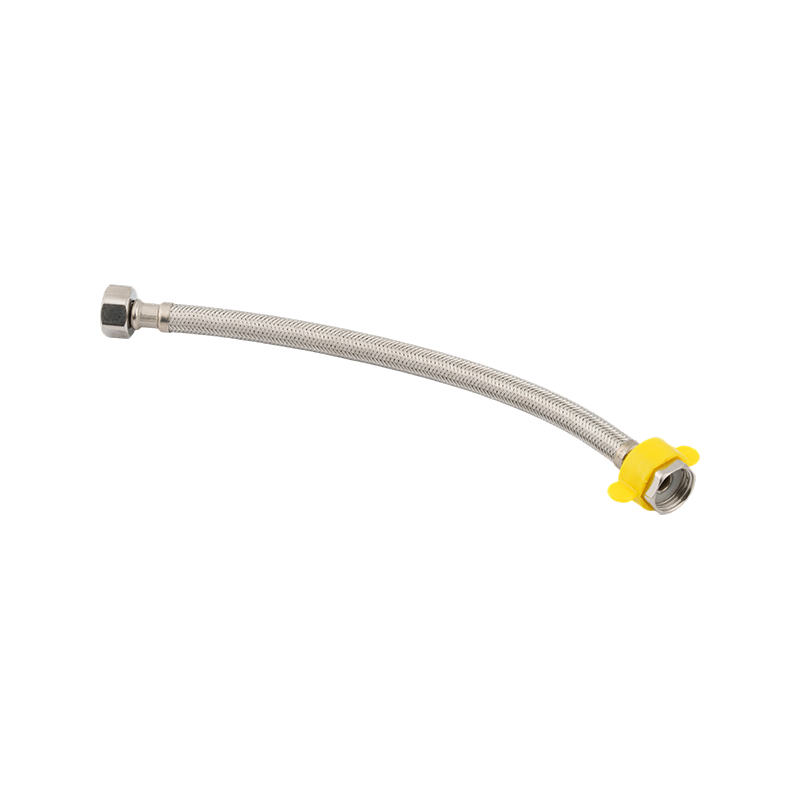
In the plumbing, HVAC, and domestic appliance sectors, the term Braided Wire Hose most commonly refers to stainless steel braided flexible connectors used for toilet cistern supply, kitchen and bathroom tap connections, washing machine and dishwasher inlets, boiler flexible connections, and gas appliance supply lines. These products use a corrugated stainless steel or copper inner tube (providing complete corrosion resistance to potable water and gas) enclosed within a stainless steel wire braid that provides burst pressure far exceeding the working pressure of domestic water and gas supply systems.
Construction of a Plumbing Grade Braided Wire Hose
A standard domestic Braided Wire Hose for potable water supply consists of:
- Inner corrugated tube: Thin wall 304 or 316 stainless steel corrugated tube, providing complete corrosion resistance to potable water, flexibility through its corrugated wall geometry, and smooth or corrugated inner bore for fluid flow. The corrugated geometry allows the tube to bend without collapsing, maintaining full bore diameter at all points in the installed configuration regardless of bend angle. Bore sizes for domestic Braided Wire Hose connectors range from 8 mm (tap connectors) to 22 mm (boiler flexible connections and washing machine inlets).
- Stainless steel braid: 304 stainless steel wire braid applied over the corrugated inner tube provides the burst pressure resistance. A standard domestic Braided Wire Hose connector with 10 mm corrugated inner tube and single stainless steel braid achieves a minimum burst pressure of 100 bar against a working pressure of 10 bar in domestic water supply (a safety factor of 10:1), providing substantial overpressure protection against water hammer and surge events in the supply system.
- End fittings: Compression swaged or crimped brass or stainless steel end fittings with standard threaded or push fit connections matching the plumbing system. The swaged fitting is the critical structural component of the hose assembly — the fitting must maintain its grip on the corrugated inner tube under the full burst pressure load without the tube pulling through the swage, and quality tested Braided Wire Hose fittings are hydrostatically tested to a minimum of 4 times the rated working pressure before release for sale.
Why Braided Wire Hose Replaced Copper and CPVC for Flexible Plumbing Connections
Rigid copper pipe connections to toilets, taps, and appliances require a skilled plumber to cut, fit, and solder or press connect accurately to the appliance inlet position, which is often at an awkward angle relative to the supply pipe location. The Braided Wire Hose connector allows the supply pipe to terminate with a standard female compression or push fit fitting at a convenient point, and the flexible hose bridges the gap to the appliance connection point at any angle and over distances of 300 mm to 1,500 mm depending on the product length. This reduces installation time, eliminates the need for precise pipe cutting and bending to match the appliance position, and provides a service friendly connection that can be disconnected and reconnected for appliance replacement without disturbing the fixed supply pipe.
Selecting the Right Braided Hose: Key Specification Criteria
Choosing between a Steel Wire Braided Hose, a Mixed Filament Braided Hose, and a standard Braided Wire Hose for a specific application requires evaluating five specification variables that together define whether the hose is safe and appropriate for the service conditions.
The Five Critical Specification Variables
- Working pressure and safety factor: The hose working pressure rating must exceed the maximum system operating pressure, including pressure surges. The required safety factor between working pressure and burst pressure varies by application standard: hydraulic hose standards (SAE J517, EN 853) require a minimum 4:1 safety factor (burst pressure at least 4 times the rated working pressure); gas hose standards require 5:1 or higher; plumbing connection hoses to EN 13618 require 10:1. Always confirm the working pressure rating of the chosen hose against the maximum system pressure including surge allowance, not just the static operating pressure.
- Temperature range: The inner tube compound and outer cover compound must both be rated for the minimum and maximum temperatures of the fluid and the ambient environment. A standard NBR inner tube Steel Wire Braided Hose rated to plus 100 degrees Celsius will permanently soften and lose pressure holding capacity if used in a system where steam or heat transfer oil at plus 150 degrees Celsius is conveyed. Confirm both the minimum installation temperature (below which the hose must not be bent during assembly) and the maximum continuous service temperature for the intended fluid.
- Fluid compatibility: The inner tube material must be chemically compatible with the conveyed fluid across the full concentration range and temperature range of the application. Nitrile rubber (NBR) is compatible with hydraulic oils, fuels, and water but not with ketones, esters, or concentrated acids. EPDM rubber is compatible with steam, hot water, and dilute acids but not with petroleum based fluids. PTFE is compatible with virtually all fluids. A Mixed Filament Braided Hose with PTFE inner tube is the correct choice whenever fluid compatibility with a rubber or thermoplastic inner tube cannot be confirmed from the fluid supplier's chemical compatibility data.
- Minimum bend radius: Every braided hose has a minimum bend radius — the tightest curve the hose can be formed into without kinking or collapsing the bore. Installing a hose in a bend tighter than its specified minimum bend radius causes the braid wires or filaments to buckle, the inner tube to kink and restrict flow, and the hose fatigue life to decrease dramatically from the increased stress concentration at the kink point. A standard SAE 100R1 Steel Wire Braided Hose at 12 mm bore has a minimum bend radius of 75 mm; a flexible PTFE stainless steel Mixed Filament Braided Hose at the same bore may achieve a minimum bend radius of 50 mm due to the higher flexibility of the corrugated PTFE inner tube.
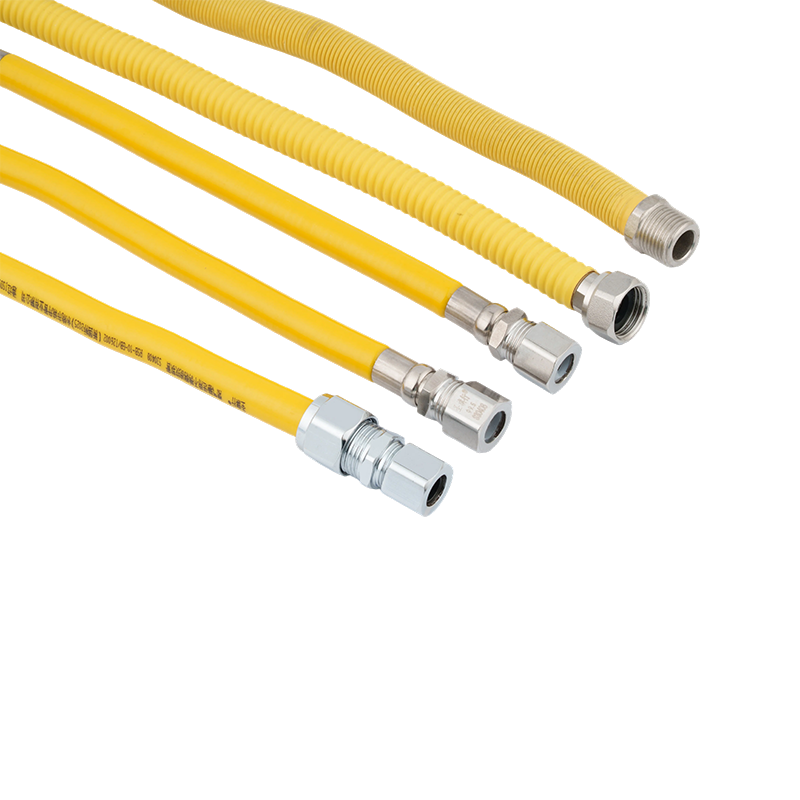
- End fitting standard and connection type: The end fittings on a braided hose must match the connection standard of the mating port or fitting in the system. Hydraulic hose fittings are available in BSP (British Standard Pipe), NPT (National Pipe Thread), JIC 37-degree flare, metric DIN, and O ring face seal (ORFS) standards that are not interchangeable. The fitting type must be specified when ordering the hose assembly, as the same hose body is used with different end fittings for different connection standards, and mismatched fittings will leak regardless of the hose quality.
Frequently Asked Questions
1. What is braided hose used for in everyday household applications?
In household settings, braided hose is used primarily as flexible supply connectors for toilets (cistern fill valves), bathroom and kitchen taps, washing machines, dishwashers, refrigerator ice makers, and gas appliances. These products are Braided Wire Hose assemblies with stainless steel corrugated inner tubes and stainless steel wire braid outers, connecting the rigid supply pipe to the appliance inlet across the short gap between the fixed pipe termination and the appliance connection point. Braided hose in this context has replaced rigid copper connections in most modern residential plumbing installations because it is faster to install, does not require soldering or specialised tools, accommodates misalignment between the supply pipe and appliance positions, and is easily replaced when an appliance is changed without disturbing the supply pipework.
2. How is a Steel Wire Braided Hose different from a spiral wound hydraulic hose?
A Steel Wire Braided Hose uses a woven braid structure where the wires cross over and under each other at the braid angle, while a spiral wound hose uses multiple layers of steel wire wound helically around the inner tube at alternating angles without the interlocking crossover of the braided structure. Spiral wound construction achieves higher pressure ratings than braid construction at larger bore sizes because the wound layers can be added progressively to increase pressure capacity, making spiral hose the standard for very high pressure hydraulic applications above 400 bar at bore sizes of 25 mm and above. Braided hose is more flexible than spiral wound hose at equivalent pressure ratings and bore sizes, making it preferred where repeated dynamic flexing is required, while spiral wound hose is used where maximum pressure capacity with minimum bore restriction is the priority.
3. Can a Mixed Filament Braided Hose handle steam?
A Mixed Filament Braided Hose with a PTFE inner tube and stainless steel wire outer braid can handle steam at temperatures up to 200 to 230 degrees Celsius at the corresponding saturated steam pressure, making it suitable for steam jacketed transfer lines, autoclave connections, and pharmaceutical clean in place (CIP) steam sterilisation circuits. The PTFE inner tube is dimensionally stable and chemically unaffected by steam at these temperatures, and the stainless steel braid provides corrosion free pressure containment without the rust risk of standard steel wire braid. Confirm the pressure rating at the specific steam temperature when specifying a PTFE stainless steel Mixed Filament Braided Hose for steam service, as the pressure rating decreases with increasing temperature for all hose types.
4. What causes a braided hose to fail and how can it be prevented?
The four most common causes of braided hose failure are: installation in a bend tighter than the hose minimum bend radius, which causes inner tube kinking and accelerated fatigue failure at the kink point; using the hose at pressures or temperatures above its rated limits, which directly overstresses the inner tube and braid; external abrasion of the outer cover that eventually wears through to the braid layer and allows moisture to corrode steel wire braid from outside; and fitting damage from incorrect assembly of end fittings, which causes the fitting to pull off the hose body under pressure. Prevention measures include routing the hose with adequate bend radius clearance in the installation, fitting protective sleeves over the hose at points of potential contact with sharp edges or moving components, confirming the system pressure and temperature against the hose rating before installation, and using quality certified fittings assembled with the correct tooling and crimping specifications.
5. What is the service life of a Steel Wire Braided Hose in hydraulic service?
The service life of a Steel Wire Braided Hose in hydraulic service depends on the working pressure level relative to the rated pressure, the degree of dynamic flexing, the fluid temperature, and the quality of installation. SAE and ISO hydraulic hose standards specify design fatigue lives measured in impulse cycles: SAE J517 requires hydraulic hose to withstand a minimum of 150,000 to 500,000 pressure impulse cycles at 133 percent of the rated working pressure without failure, depending on the hose specification. In practical mobile hydraulic service, a well specified and correctly installed Steel Wire Braided Hose operating at 70 to 80 percent of its rated working pressure typically achieves a service life of 3 to 5 years before replacement is recommended as a preventive maintenance measure, regardless of whether visible degradation is present, because internal tube wear and braid fatigue are not detectable by external inspection.
6. What does the bore size of a braided hose affect in a hydraulic system?
The bore size of a braided hose in a hydraulic system determines the flow velocity at the system's flow rate, which directly affects the pressure drop across the hose and the fluid temperature rise from friction losses. As a general rule, hydraulic hose bore should be selected so that the fluid velocity through the hose does not exceed 3 to 4 metres per second for return and case drain lines, 2 to 3 metres per second for inlet suction lines, and 4 to 6 metres per second for pressure lines under continuous flow conditions. Undersized bore produces excessive pressure drop and heat generation that increases system operating temperature and reduces component life. Oversized bore adds unnecessary cost and installation weight without performance benefit. A Steel Wire Braided Hose or Mixed Filament Braided Hose should be sized by flow rate and velocity calculation, not by matching the port size of the connected components, as port sizes are often larger than the optimum hose bore for the actual flow rate in the circuit.
7. Is Braided Wire Hose safe for drinking water supply?
A Braided Wire Hose with a stainless steel corrugated inner tube is fully safe for drinking water supply, as the 304 or 316 stainless steel inner tube is inert and does not leach any substance into the water at domestic supply temperatures and pressures. Products intended for potable water supply should carry certification to the relevant national or regional drinking water standard, such as WRAS (UK), NSF 61 (USA), or ACS (France), confirming that all materials in contact with the water have been tested and confirmed free from substances that could impair water quality or pose a health risk at the concentrations that could transfer from the product to the water under normal use conditions. Do not assume potable water safety from appearance alone — a Braided Wire Hose with a rubber inner tube intended for general plumbing may not carry potable water certification even if it looks identical to a certified stainless steel inner tube product.
8. What is the difference between EN 853 and SAE 100R specifications for Steel Wire Braided Hose?
EN 853 and SAE 100R are parallel standards for Steel Wire Braided Hose that specify very similar construction and performance requirements but with minor differences in test methods, dimensional tolerances, and pressure rating tables. EN 853 1ST and SAE 100R1 AT are essentially equivalent specifications for single steel wire braid hydraulic hose, and EN 853 2ST and SAE 100R2 AT are equivalent for double wire braid. The AT suffix on SAE specifications denotes a higher temperature cover compound (MSHA approved for mining service) compared to the standard cover. In practice, a hose certified to EN 853 1ST will meet or exceed the performance requirements of SAE 100R1 AT at equivalent bore sizes, and the two specifications are interchangeable for most hydraulic system applications. European machinery manufacturers typically specify EN standards; North American and Asian built machinery typically specifies SAE standards.
9. How should braided hose assemblies be stored to maximise shelf life?
Braided hose assemblies should be stored coiled (not bent sharply or kinked), in a cool, dark, dry location away from direct sunlight, ozone generating equipment (electric motors, welding equipment), and hydrocarbon vapours that accelerate rubber degradation. The ISO 4080 standard for hydraulic hose storage recommends a storage temperature between minus 15 and plus 35 degrees Celsius, relative humidity below 70 percent, and away from any source of artificial light that emits UV radiation. Under these conditions, rubber inner tube braided hydraulic hoses have a shelf life of up to 6 years from the manufacturing date marked on the hose before the rubber compounds degrade sufficiently to require pressure testing or retirement without use. PTFE inner tube Mixed Filament Braided Hose products have indefinite shelf life under appropriate storage conditions, as PTFE is not degraded by ozone, UV, or atmospheric oxygen.
10. What certifications should I look for when buying a braided hose for industrial or gas applications?
For hydraulic service, look for hose certified to SAE J517 or EN 853 or EN 857 with an independent third party laboratory test report confirming the pressure and impulse cycle ratings. For gas service, look for Braided Wire Hose or Steel Wire Braided Hose certified to EN 16436 (LPG rubber hoses) or ISO 3821 (welding and cutting gas hoses) with CE marking for European use, or AGA or CSA certification for North American gas appliance connections. For potable water, WRAS, NSF 61, or equivalent national certification is required as discussed above. For food and pharmaceutical applications, FDA compliance of all wetted materials and 3A Sanitary Standards or EHEDG design certification (for Mixed Filament Braided Hose assemblies used in food grade and pharmaceutical processes) confirm that the hose design and materials meet the hygiene requirements of the relevant industry standards. Never use an uncertified hose in a gas, high pressure, or food contact application — the cost difference between certified and uncertified products is a small fraction of the potential liability from a hose failure in these applications.



 English
  中文简体
中文简体  عربى
عربى  Español



 Wholesale Flexible Metal Hose Manufacturers