Three quotations arrive for the same 3/8-inch stainless steel gas hose assembly, and the prices differ by nearly a third. The gap rarely comes from the corrugation machine. It comes from how much of the assembly the supplier actually makes in its own plant, and how much of it is bought in, re-labelled and shipped on.
The short answer: score a flexible metal hose factory on four control points — tube forming, braid, end-fitting machining and pressure testing — and then check whether all four sit under one roof. When any one of them is outsourced, the failure modes shift, but the schedule risk does not go away.
Yuyao Shengchuang Pipe Industry, trading as Chengzhou Pipe, is a workable example of that model. It has operated since 2015 inside the Jiangnan plumbing cluster in Yuyao, Zhejiang, runs a 30,000 m² factory with more than 100 staff across production, engineering, quality control and warehousing, and has spent over a decade on gas pipeline products specifically rather than on hose in general.
What a Flexible Metal Hose Factory Must Control In-House
Flexible metal hose is a short bill of materials with a long list of interactions. The tube sets the pressure rating and the minimum bend radius, the braid carries the hoop load, the fittings decide whether the joint seals, and the test decides whether a defect is found at the factory gate or at a customer's installation site. Spread those four stages across different vendors and nobody owns the leak.
The diagram below is the same set of decisions a factory works through on every enquiry, whether the order is a standard 3/8-inch gas hose or a flanged assembly for plant pipework:
Each branch is a separate process step with its own tooling. A factory that forms its own corrugation can adjust wall thickness and pitch; one that buys finished tube cannot. A factory that machines its own fittings can hold thread tolerance and O-ring seat depth on a single print; a reseller passes that question back to an overseas plant.
Chengzhou Pipe keeps all four stages internal, and the sequence is set out on its manufacturing workflow page. The point that matters for procurement is ownership rather than the equipment list: research, production, inspection, warehousing and delivery run as one chain, with an in-house testing laboratory and dedicated quality-control positions on the payroll instead of an outsourced inspection report.
Construction families, the duty each is normally selected for, and where each one is usually installed.
Construction
Duty it handles
Typical installation
Corrugated stainless tube, unbraided
Low pressure, high flexibility, vibration absorption
Appliance connections, short offsets
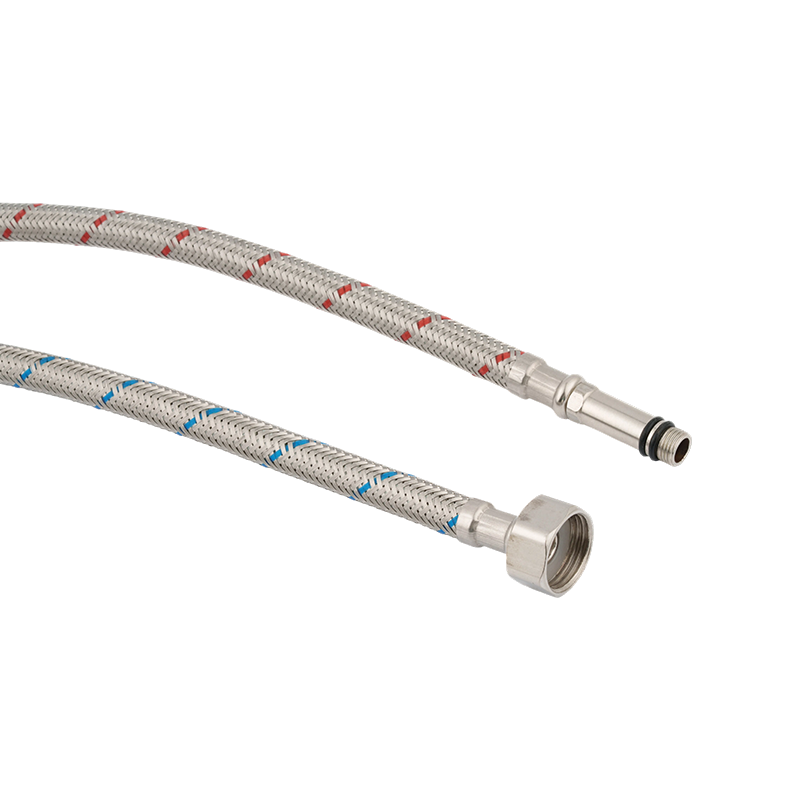
Corrugated tube with steel wire braid
Higher working pressure, abrasion and kink resistance
Pumps, compressors, high-pressure lines
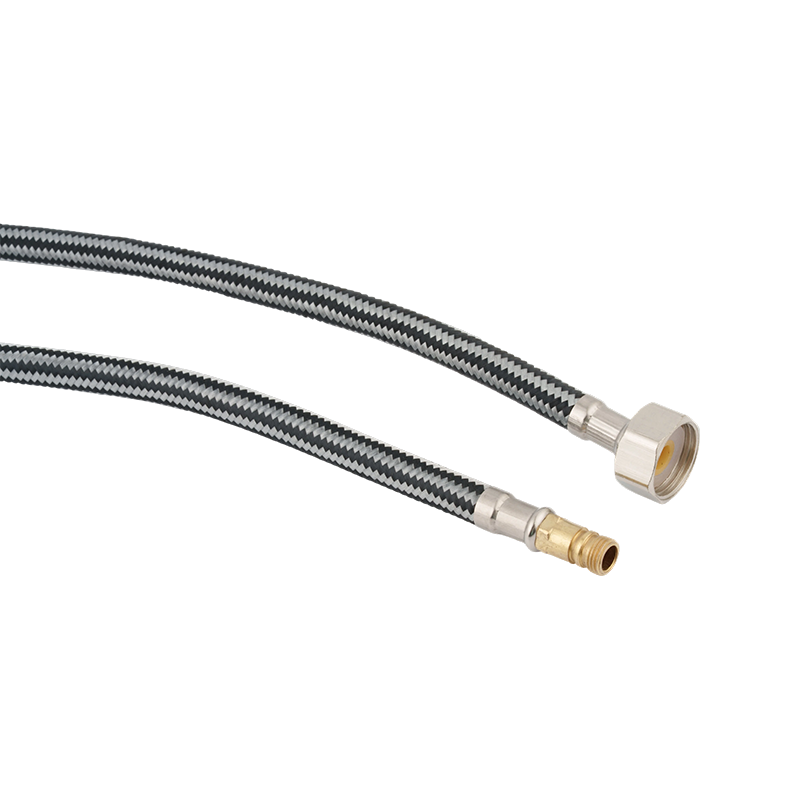
Corrugated tube with mixed-filament braid
Corrosive atmospheres, lighter weight
Equipment in humid or chemical environments
Flanged metal hose
Larger diameters, bolted interfaces, movement compensation
Industrial headers, skids, plant pipework
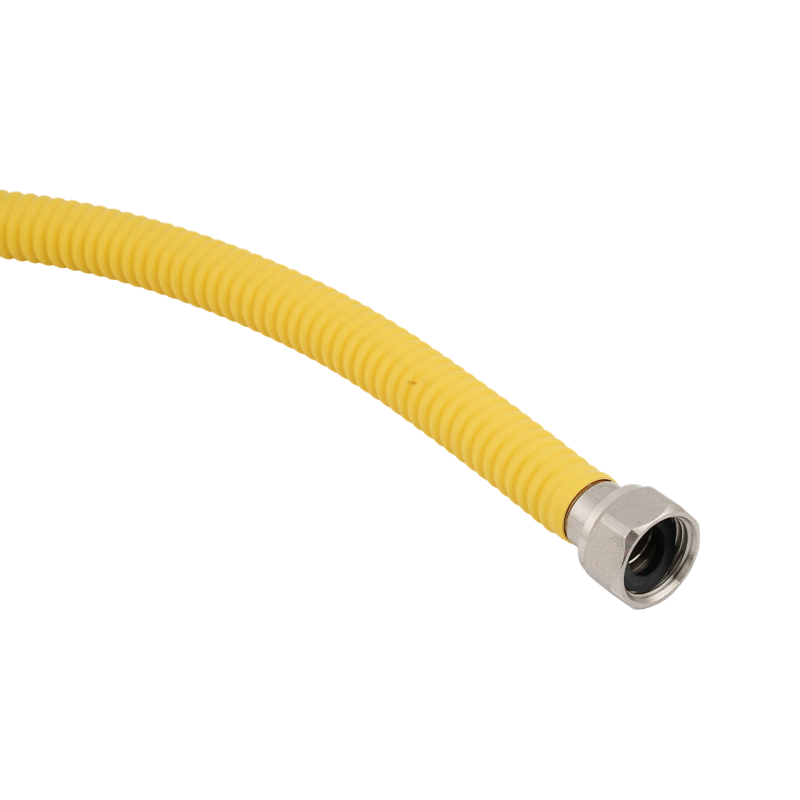
Coated corrugated gas hose
Extra external protection on concealed routes
Domestic gas runs behind panels and walls
Match the Construction to the Failure Mode, Not the Catalogue Page
Buyers tend to start with diameter and finish with price. Start with the failure mode instead, because that is what the construction is actually chosen to prevent. Four duty types cover most enquiries.
Vibration and repeated movement
Compressors, pumps, wall-hung boilers and appliances on flexible tails all impose movement. The hose has to absorb it without work-hardening the corrugation. A corrugated stainless hose with a controlled braid angle and enough straight length ahead of the fitting is the standard answer; a short, tightly bent assembly will crack at the braid collar long before it reaches its rated cycle count.
Salt air, cleaning chemicals and condensate attack the outer layer first. Mixed-filament braid is the lighter option where the braid itself must resist corrosion; steel wire is preferred where mechanical abrasion is the bigger threat. A coating over the corrugation adds a further barrier on gas runs that pass through wall cavities.
Pressure and temperature cycling
Steel wire braid carries the hoop load, and the seal at the fitting is almost always the weak link rather than the tube. O-ring sealed connections hold up better than metal-to-metal joints under repeated heat cycles, provided the O-ring seat is machined to depth and the installer does not over-torque the nut.
Bolted industrial pipework
Flanged assemblies are specified when the interface is a flange rather than a thread. Two details decide whether the unit drops in: bolt-hole orientation relative to the hose axis, and the face-to-face length after welding. Get either wrong and the hose will fit only with the pipe springing into alignment, which is the start of a fatigue failure.
Quotations usually agree on diameter and length and then disagree on the four or five things that stop an assembly from fitting. These are the ones worth writing into the purchase order:
Thread form. G (BSP parallel), NPT and metric threads look similar across a table but will not interchange. State the standard and the size, not just the diameter.
Length datum. End-to-end, face-to-face and "between fitting faces" differ by the length of the fittings themselves — often 15 to 25 mm on a short gas hose, which is enough to fail an inspection.
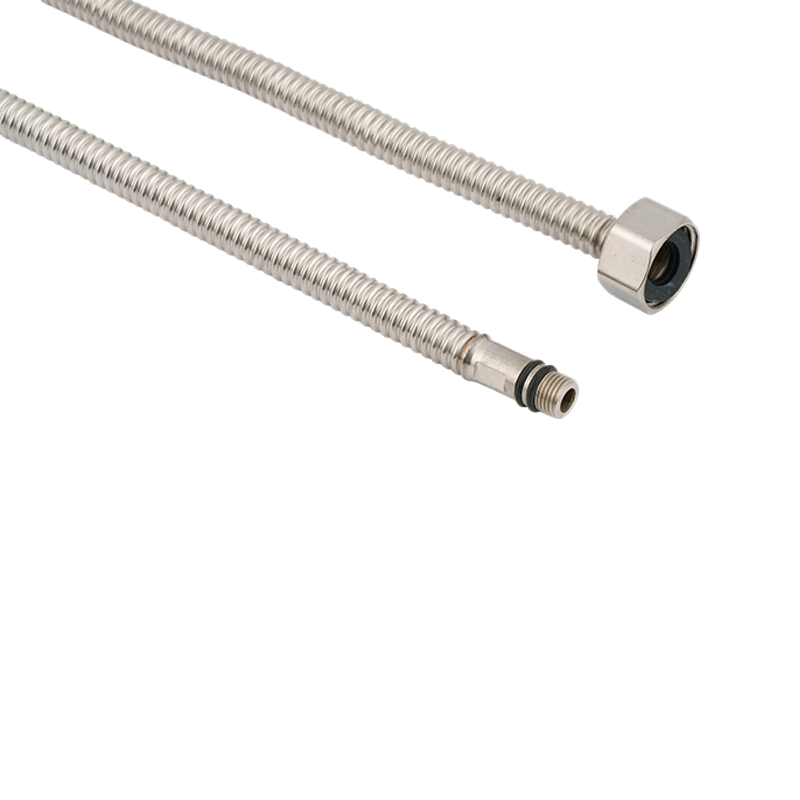
Insertion depth and O-ring seat. On single-plug gas hoses, the plug depth and the position of the retaining feature decide whether the socket seals or weeps.
Bend radius and routing. A minimum bend radius quoted at the tube does not account for the braid collar. Ask for the installed radius, measured from the end of the ferrule.
Marking and packaging. Batch code, standard reference, pressure rating and date code on the hose itself, plus bag quantity and carton marking, keep a container-load traceable through a distributor's warehouse.
Stock Depth, Dispatch Rate and the Cost of a Late Container
Price is visible and delay is not, which is why lead time deserves more scrutiny than it usually gets. A factory carrying finished stock across its full range and dispatching up to 10,000 pieces a day from its own warehouse absorbs seasonal demand very differently from one that builds only to order.
Chengzhou runs its gas hose, corrugated, braided and industrial hose lines on year-round stock and has published a note on stock depth and dispatch speed that states the same figures. The logistics geography helps here: Yuyao's plumbing cluster has freight coverage across China, so a restock does not wait on a single carrier.
For a distributor, that translates into a simple test during supplier evaluation — ask what percentage of the ordered mix ships from stock and what the cut-off time is. Anything below a clear answer is a build-to-order supplier wearing a stock supplier's marketing.
How to Vet a Factory Before the First Bulk Order
A factory visit is useful, but a document set plus one sample lot will tell you most of what a visit would. Work through these in order:
Certification scope, not just the certificate. ISO 9001 and 3C cover defined processes and product categories. Check that the scope matches the product you are buying.
Test data on the sample lot. Ask for the leak or pressure test record tied to the batch code on the samples you receive, not a generic type-test report.
Traceability from hose marking to shipping carton. If the two cannot be linked, a field failure cannot be narrowed to a production window.
Capacity against your peak, not your average. Compare monthly capacity with the volume you need in your busiest quarter.
Fitting inventory and tooling. A factory holding its own fitting tooling can respond to a thread change without a six-week mould lead time.
Packaging and labelling discipline on the sample. It is the cheapest reliable indicator of how the bulk order will be handled.
Where a Gas-Focused Factory Fits Best
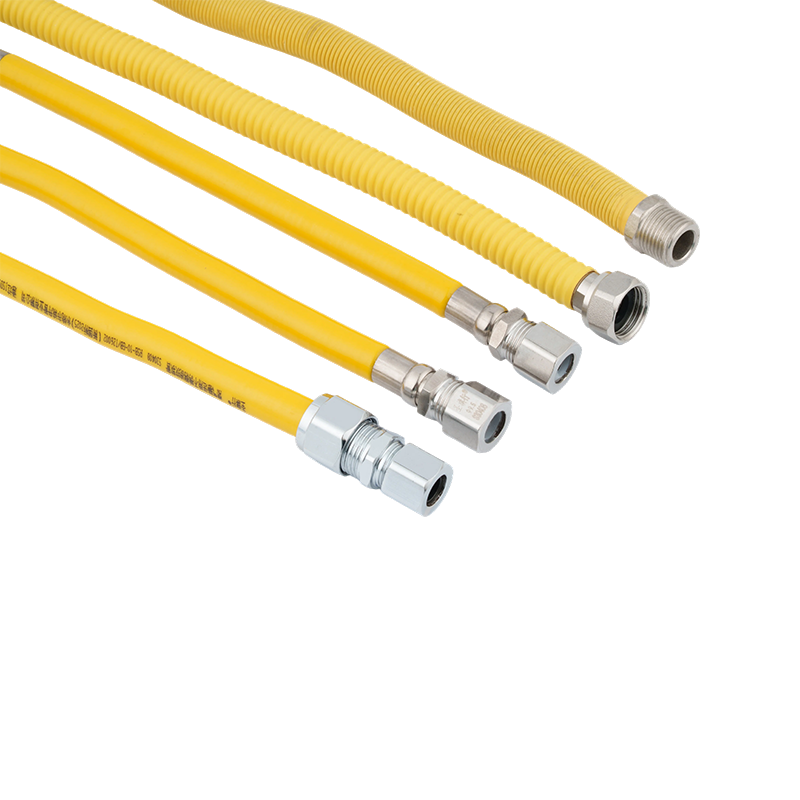
Hose factories are not interchangeable across applications, and a supplier built around gas pipeline products brings a particular fit. Domestic gas appliance connections — cookers, water heaters, wall-hung boilers — are the core: 3/8-inch national-standard fixed-length gas hose in double-threaded and single-plug variants, plus a safety-coated corrugated version where the route needs external protection. Standardised length and standardised threads are the whole point in that channel, because the installer needs a repeatable fit, not a custom assembly.
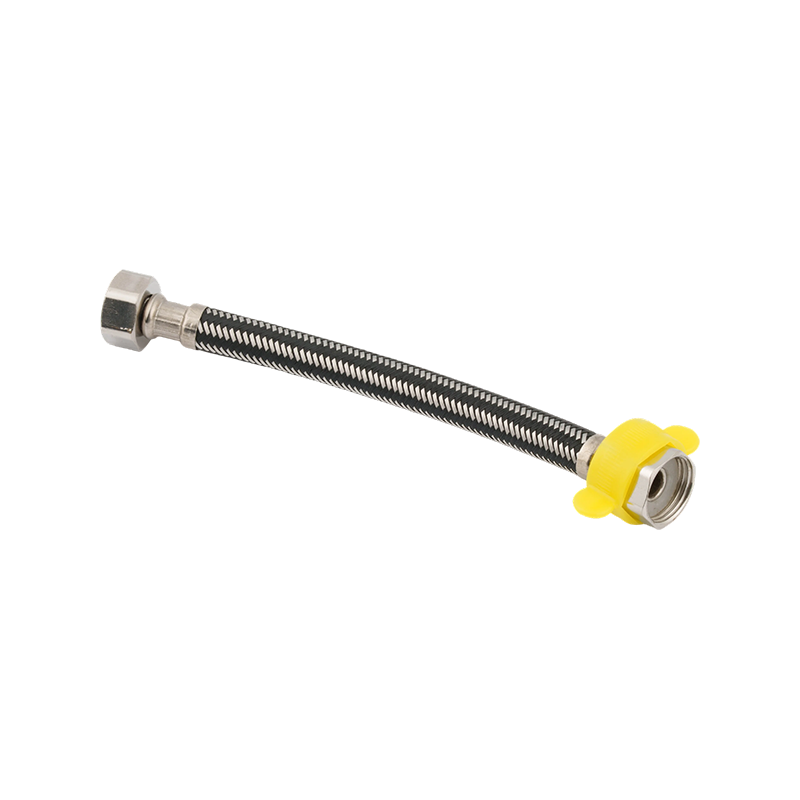
The industrial side then picks up where gas stops: flanged metal hose for bolted pipework, corrugated assemblies on vibration duty, and braided hose for high-pressure or two-temperature fluid lines. A separate line of bidet sprayers uses the same stainless hose as a component, which is useful context for buyers sourcing mixed containers from one supplier.
The practical reading is that this kind of factory suits distributors, gas utilities, fitting contractors and hardware chains that buy repeatable, standardised assemblies in volume and need them in stock — and suits custom engineering less well than a specialist fabricator would.
The question to bring to any flexible metal hose factory is narrow and answerable: which of the four control points do you own, what document proves it for my batch, and how much of my order ships from stock this month. A supplier that answers all three without qualification is a supplier worth a sample order. One that answers two is worth a trial. One that answers none is a trading company, and the price it quoted was never the full cost.
Start with the sample, the batch code and the test record. Everything else in the relationship follows from whether those three line up.



 English
 中文简体
 عربى
 Español






 Wholesale Flexible Metal Hose Suppliers