Two flexible metal hoses can look identical in a catalog and behave completely differently on a job site. One may be formed from documented 304 stainless steel coils, welded under controlled parameters, pressure-tested, and stamped with a batch code. The other may be visually similar, produced from unverified material, and shipped without a single test record. This is why flexible metal hose manufacturers should be judged by process and proof rather than by product photography.
The conclusion up front: when you source flexible metal hoses for gas appliances, industrial piping, or high-pressure water lines, material traceability, testing routines, and warehouse capacity matter more than unit price. This article separates dependable flexible metal hose manufacturers from commodity resellers, and it lists the questions you should ask before placing an order.
What Defines a Reliable Flexible Metal Hose Manufacturer
Raw material control comes first. A flexible metal hose is built around a corrugated core of stainless steel, and the quality of that coil determines weld soundness, corrosion resistance, and service life. Reliable suppliers keep material certificates for each batch and can trace a finished hose back to the coil it was formed from. Ask directly: can you show the mill certificate for the stainless steel used in my order?
Testing is the second pillar. A serious factory checks every finished piece with air leak testing or hydrostatic pressure testing, and runs vibration or flexing checks on production batches. Certification such as ISO 9001 and 3C adds structure to these routines, but the proof is on the test bench. At Chengzhou Pipe, for example, a standardized test laboratory supports every production line, and that kind of documented quality-control routine is exactly what buyers should look for.
Certifications are useful, but they do not tell you which batch your parts come from. Two suppliers with the same certificate can differ in how often they calibrate pressure gauges, how carefully they record test results, and whether they accept leakage at the upper tolerance limit. That is why a factory audit, or at least a detailed inspection checklist, is more valuable than a downloaded PDF.
Factory-level checklist for comparing flexible metal hose manufacturers.
| Evaluation point |
What it reveals |
What to check |
| Raw material certificate |
Confirmed stainless steel grade and wall thickness |
Request 304 or 316 mill certificates for the batch |
| Pressure testing |
Whether the bellows hold rated working pressure without leakage |
Ask if every piece is tested or only samples |
| End fitting attachment |
Weld strength and leak resistance at the joint |
Confirm whether welding or swaging is done in-house |
| Batch traceability |
Ability to recall or investigate a defective lot |
Check whether finished hoses carry batch codes |
| Packaging standard |
Protection of threads and corrugations during transit |
Look for thread caps, protective wrapping, and labeling |
Share of flexible metal hose suppliers performing each check (illustrative benchmark)
Incoming material inspection 82%
In-house weld control 64%
100% pressure testing 47%
Batch-level traceability 31%
Illustrative values for discussion; verify each point directly with the supplier.
How a Flexible Metal Hose Is Manufactured
Understanding the production steps helps you identify a real manufacturer. A typical process for a stainless steel flexible metal hose looks like this:
- Slitting stainless steel strip to the exact width required for the corrugation profile.
- Roll-forming the corrugations on a dedicated machine that controls pitch and depth.
- Heat treatment or annealing to restore ductility after the forming process hardens the material.
- Cutting to length and attaching end fittings by welding or mechanical swaging.
- Pressure testing and leak testing the finished assembly where the specification requires it.
- Packaging with thread protection, labeling, and batch marking for traceability.
Manufacturers that perform corrugating, fitting attachment, and testing in-house can adjust tolerances, handle custom lengths, and keep quality consistent across large orders. If the supplier outsources the corrugated core or the pressure test, you inherit variability that is difficult to trace.
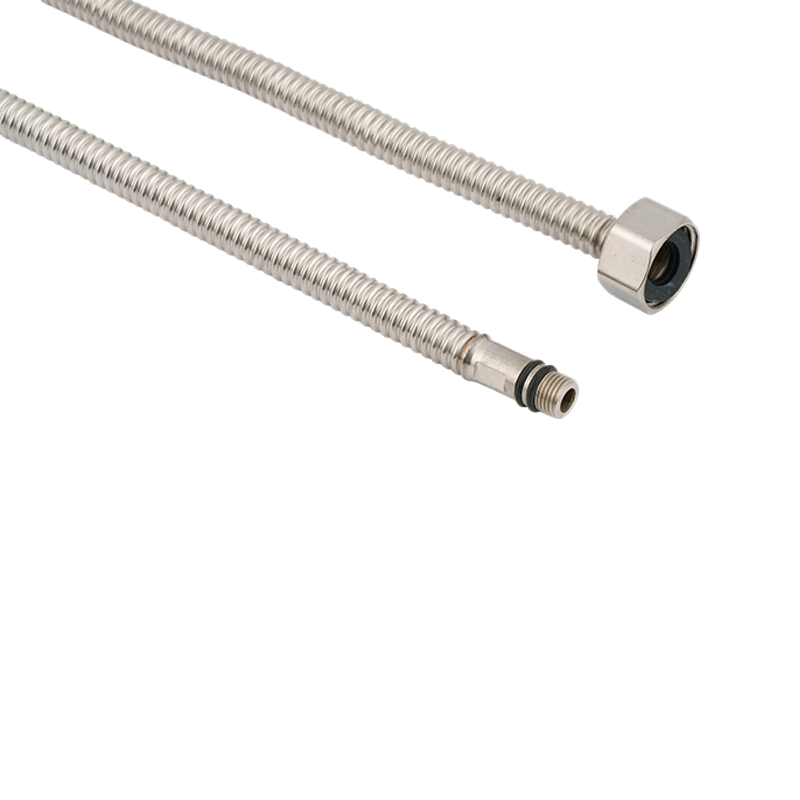
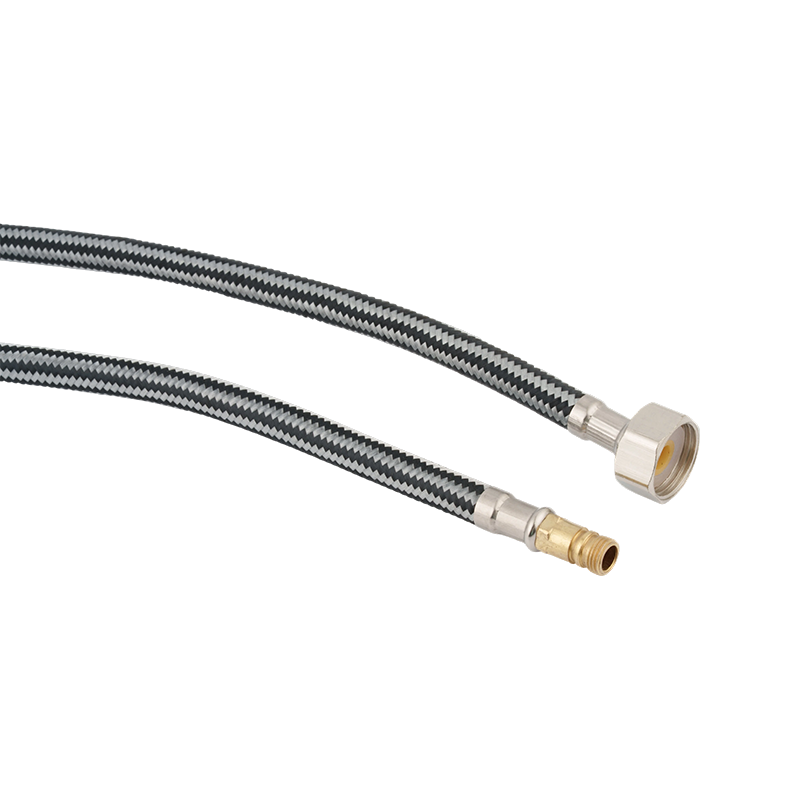
For installations near pumps, compressors, or other vibration sources, a reinforced corrugated hose with higher wall strength absorbs movement without cracking at the fitting. This is one example of how the same base material becomes different products depending on the forming process and reinforcement design.
Matching the Hose Design to the Application
A flexible metal hose is not one generic product. The right design depends on the medium, the connection type, and the movement it must absorb. The selection path below maps common applications to hose constructions:
- Gas appliance line
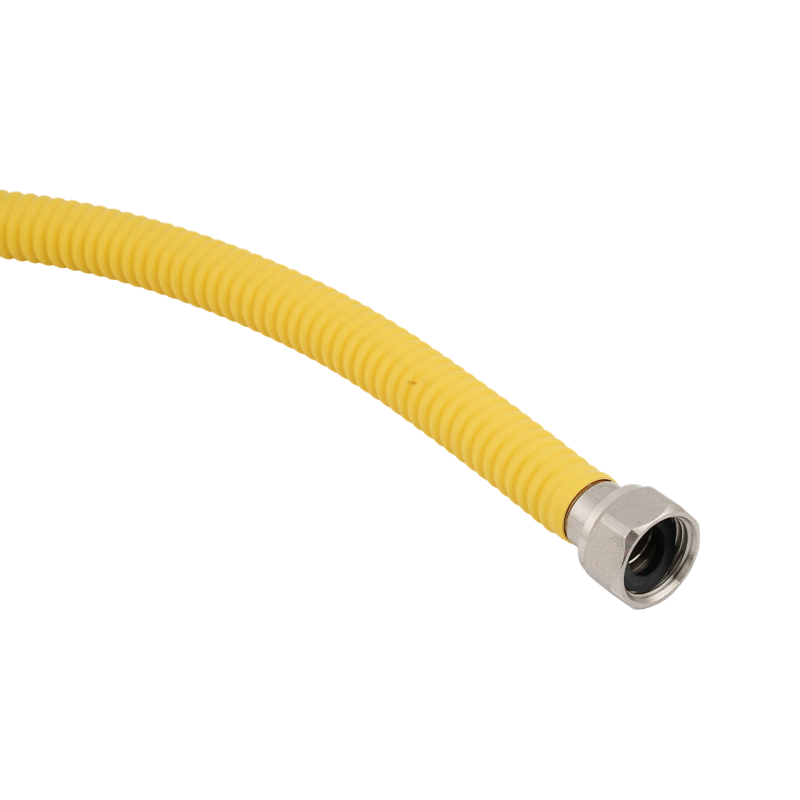
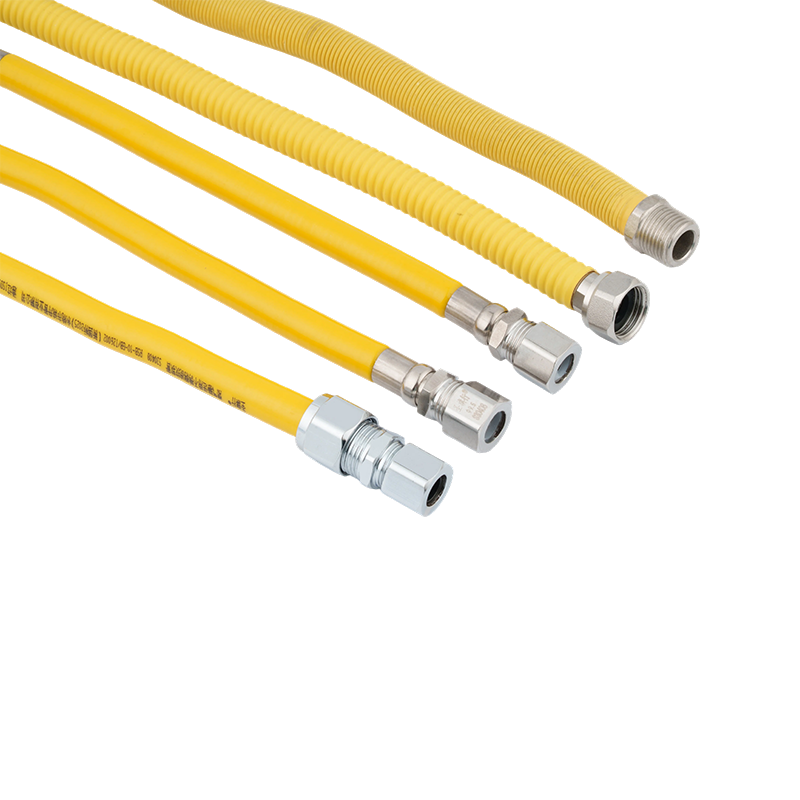
- Threaded inlet at both ends — double-threaded fixed-length gas hose
- Plug-in connection on one side — single-plug gas hose
- Industrial piping
- Flange-to-flange connection — flanged metal hose
- Threaded precision line — industrial-grade corrugated hose
- High-pressure or dual-temperature fluid
- Steel-wire braided reinforcement — high-pressure braided hose
- Frequent disconnection — quick-connect braided hose
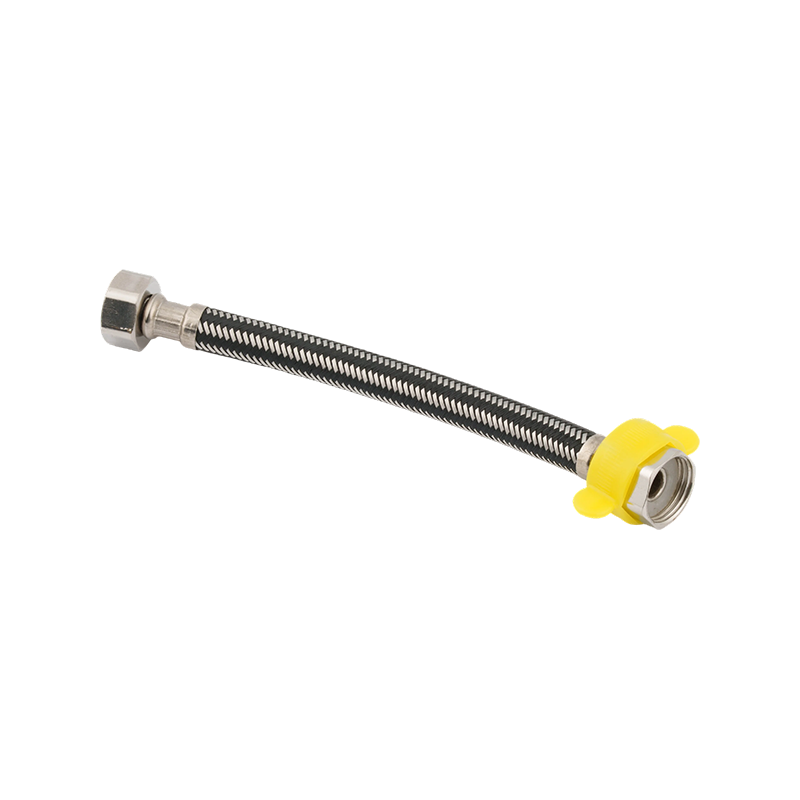
For household gas connections, fixed-length hoses with 3/8-inch threads are the baseline because they match standard appliance inlets and wall valves. When one side of the installation uses a plug-in port, a single-plug hose reduces the number of threaded joints and speeds up installation. Standardized designs are usually kept in stock, which shortens lead times for distributors and contractors.
In industrial plants, flanged metal hoses simplify maintenance and absorb thermal expansion between equipment. Because flange standards and bore sizes vary, a manufacturer that can supply flanged metal hoses in custom lengths becomes more valuable for engineering projects.
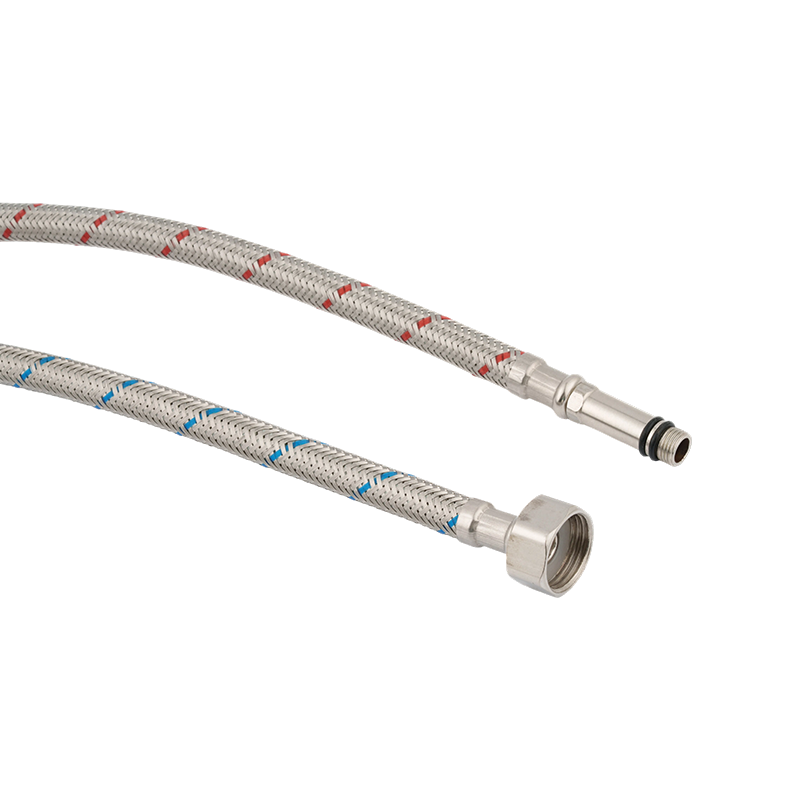
For high-pressure or dual-temperature water lines, braided reinforcement adds burst resistance; steel-wire braided hoses handle higher working pressure than mixed-fiber versions. The fitting style also matters: O-ring seals help in dual-temperature circuits, while quick-connect designs suit equipment that is disconnected regularly.
Why Delivery Consistency Is Part of Product Quality
A supplier that cannot deliver on time interrupts your own projects, which makes delivery reliability part of product quality. Manufacturers with finished-good warehouses can ship standard items immediately; factories that produce only on demand force you to wait for each order.
Location also plays a role. A manufacturer based in a mature plumbing cluster benefits from a complete supply chain and dense logistics networks, reducing replenishment cycles for fittings and raw materials. When you evaluate flexible metal hose manufacturers, ask about standard stock levels, daily dispatch capacity, and lead time for non-standard lengths.
Chengzhou Pipe, for example, maintains year-round inventory across all product lines, and its warehouse dispatches around 10,000 pieces per day. That level of supply stability supports channel partners who need predictable replenishment. You can read more about the facility and production scope on the company profile page.
Questions to Ask Before You Commit
- Do you test every piece or only a sample per batch?
- Can you provide a material certificate that traces back to the stainless steel coil?
- What end fitting options do you support: threaded, plug-in, quick-connect, or flange?
- What is your current stock for standard 3/8-inch gas hoses, and what is your dispatch cycle?
- How do you protect threads and corrugations during packaging and transit?
The Bottom Line
Low unit price is easy to quote and difficult to verify. The flexible metal hose manufacturers that deserve your business are the ones that can show raw material records, in-house testing, and stable stock levels. Use the checklist in this article, ask the questions, and base your decision on what the factory can prove rather than on what the brochure promises.



 English
 中文简体
 عربى
 Español




 Wholesale Flexible Metal Hose Suppliers