Three cartons out of a 500-piece shipment come back from site because the nuts bottom out on the valve thread before the seal seats. The hose itself is fine — the length is right, the corrugation is sound, the braid is intact — but the order still costs a distributor a week of goodwill and a return freight bill. Wholesale buying of corrugated gas hose rarely fails on the product concept. It fails on the details a factory either controls or does not: fixed-length accuracy, thread gauging, 100% leak testing, and packing that survives a 20-foot container.
The short answer: source from a factory that builds to a fixed-length standard series, tests every piece rather than sampling, holds finished stock for repeat orders, and can hand you the certification file before you ask for it. The rest of this article explains why those four points decide your landed cost, and how to verify them in an RFQ or a supplier audit.
What a Wholesale Corrugated Gas Hose Factory Actually Supplies
A corrugated gas hose is an assembly, not a commodity. Corrugated stainless tube is cut to length, fitted with machined end connections, optionally coated or braided, then pressure-tested and packed. A factory that draws and corrugates its own tube, machines its own fittings and tests in-house produces more consistent assemblies than one that bolts together bought-in parts — because every interface between suppliers is an interface where tolerance stacks up.
Our plant in the Yuyao Jiangnan plumbing cluster covers 30,000 m² with more than 100 staff across production, technical, quality and warehouse roles, and has concentrated on gas piping since 2015. That matters to a wholesale buyer in one practical way: the same team that sets the standard for a 3/8 in fixed-length hose also controls the coating line, the leak-test bench and the carton specification.
Table 1: How the four main wholesale buyer groups weigh a corrugated gas hose order.
| Buyer type |
Checks first |
Typical order shape |
| Gas utility / project contractor |
Certification file, batch traceability, test records |
Scheduled deliveries, large lots, fixed SKUs |
| Building-material distributor |
Stock availability and cartons per pallet |
Mixed SKUs, frequent repeat orders |
| Renovation / installation contractor |
Fit, insertion depth, installation speed |
Mid-volume, mixed connection types |
| Hardware retailer |
Shelf-ready packaging and price point |
Small cartons, high SKU variety |
The Specification Sheet: Numbers That Decide Fit and Price
Most receiving disputes trace back to an ambiguous line on the purchase order. Write these seven items down before a first production run, and the quotation you receive will be comparable with every other quotation in the folder.
Table 2: The line items that should be fixed in writing before a first production run.
| Parameter |
What to specify |
Why it matters at wholesale |
| Nominal size |
3/8 in standard series; other sizes on request |
Sets the fitting range and market compatibility |
| Overall length |
Fixed length, measured thread face to thread face |
Length disputes are the most common receiving reject |
| Connection |
Double-threaded, single plug, or custom |
Decides which installation jobs the SKU can serve |
| Tube construction |
Corrugated 304 stainless steel |
Flexibility, vibration tolerance, corrosion resistance |
| External protection |
Bare, safety coating, or braid |
Coating suits damp kitchens and rough handling |
| Test requirement |
100% leak and pressure test, hold time stated |
Sampling leaves escape risk inside a mixed pallet |
| Packing |
Poly bag, inner box, pieces per carton |
Drives shelf presentation and freight cost per piece |
Tolerance is where the argument usually starts. If your drawing says 1000 mm, state whether that is overall length or tube length, and ask the factory to declare its measuring method and acceptance band on the inspection report. A supplier who cannot describe how the length is gauged will not be able to hold it across a 10,000-piece run.
Testing That Should Be Non-Negotiable
Every piece, not every batch. A sampling plan is defensible for cosmetic defects and indefensible for a gas path, because a leaking assembly that passes a visual check ends up in a customer's kitchen. The test set we run on each assembly covers:
- Leak and pressure hold at the specified test pressure, with the hold time recorded
- Pull or torque resistance at the tube-to-fitting joint, the failure point in most field complaints
- Thread gauging on both ends, including insertion depth on plug-type connections
- Corrosion resistance on plated or coated parts, checked against the declared salt-spray hours
- Bend and flex cycling for anti-vibration variants used near compressors or wall-hung boilers
Paperwork carries equal weight. 3C and ISO 9001 certification, a declared standard reference on the label, and a batch code that traces back to a production date turn a complaint into a five-minute lookup instead of a recall investigation. Buyers auditing us usually spend more time in the test lab than on the production floor — you can see the equipment and the calibration records on our factory page.
Lead Time: Stocked SKUs, Coating Runs and Tooling
The single biggest lever on lead time is not machine speed, it is whether the item is a stocked standard or a configured variant. Stocked fixed-length hose ships from the warehouse; a coating run needs a batch slot; OEM cartons need print approval before the line can start. We hold the full series in stock year-round and dispatch up to 10,000 units a day from the warehouse, which is what makes short repeat cycles realistic for distributors.
Planning lead times by order type (working days, indicative)
Stocked 3/8 in hose4
Safety-coated run12
OEM carton + label18
Custom length, new fittings27
Plan your first order against the bottom bar and your replenishment against the top one. Distributors who mix the two — a custom length ordered on a stock replenishment cycle — are the ones who end up air-freighting cartons.
Matching the Hose to the Installation
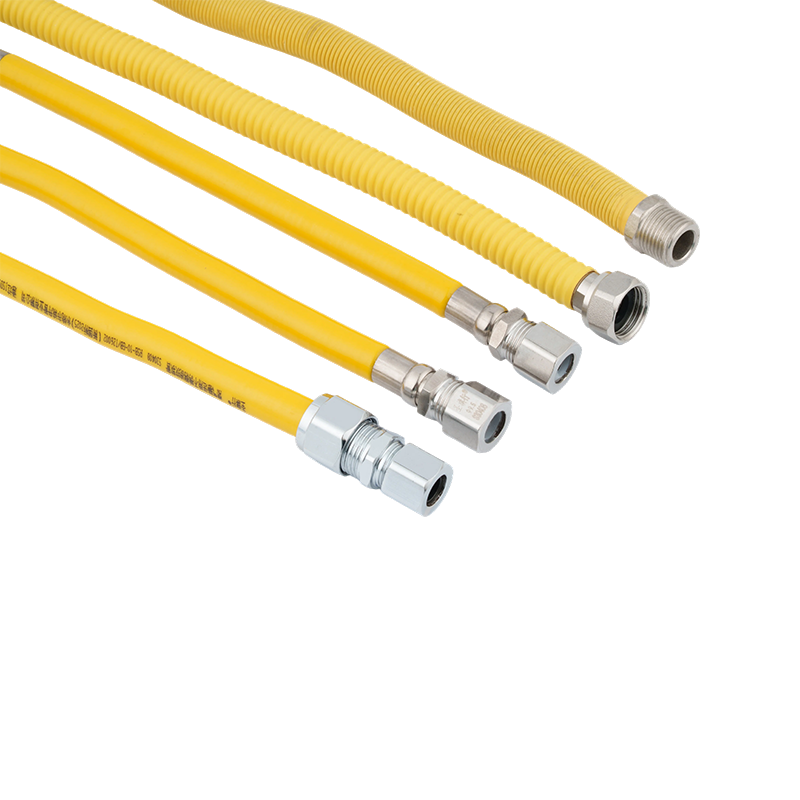
The 3/8 in fixed-length series is the base layer of most wholesale catalogues, and it splits by connection type rather than by brand story.
- Corrugated gas hose, 3/8 in fixed length
- Double-threaded
- Standard double-threaded assembly
- Industrial-grade integrated double-threaded assembly
- Single plug
- Standard single-plug assembly
- Safety-coated corrugated assembly
Where both ends of the connection are threaded — a gas valve to a hob inlet, for example — a double-threaded assembly removes the need for an adapter and one potential leak point. The
 Double-Threaded Fixed-Length Stainless Steel Gas HoseThreaded-end gas hose that removes an adapter and leak point; S30408 corrugated core, tested sealing, and broad appliance fit make it a practical stock item.View Product →
is the SKU most distributors keep in depth, because it covers the largest share of domestic appliance connections without extra parts on the van.
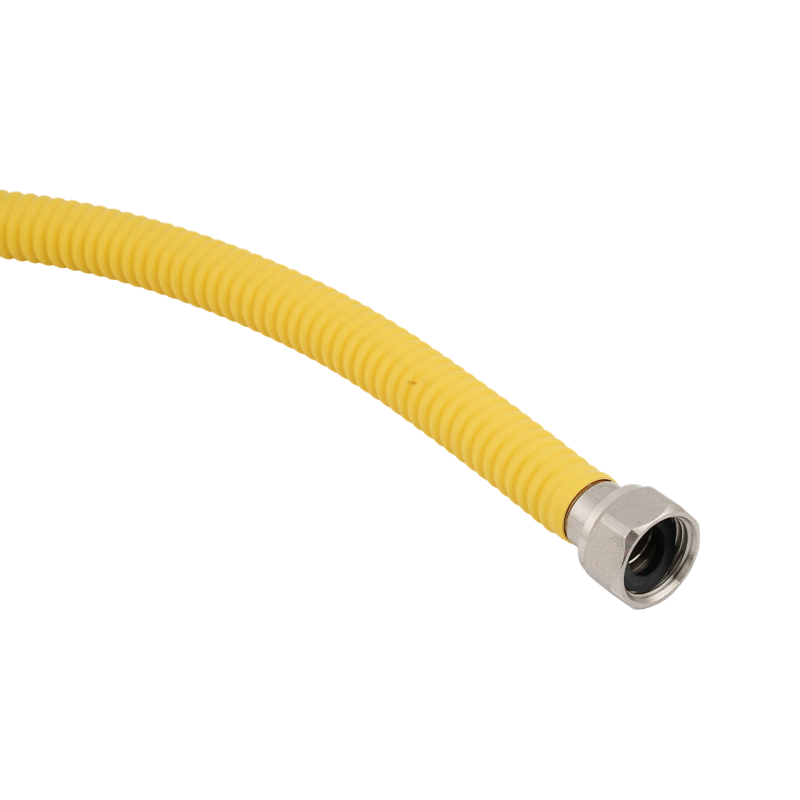
Where one side is a plug-in outlet, a single-plug assembly installs faster and is harder to cross-thread. For kitchens and utility rooms where the hose sits close to a wall, a coated variant adds an abrasion layer and keeps handling marks off the stainless surface. That is the role of the
 Safety-Coated Single-Plug Stainless Steel Gas HoseSingle-plug fixed-length hose with flame-retardant coating for exposed kitchen and utility runs; 304 corrugated core, precision connectors, no on-site cutting.View Product →
, which is also the version contractors ask for on exposed runs.
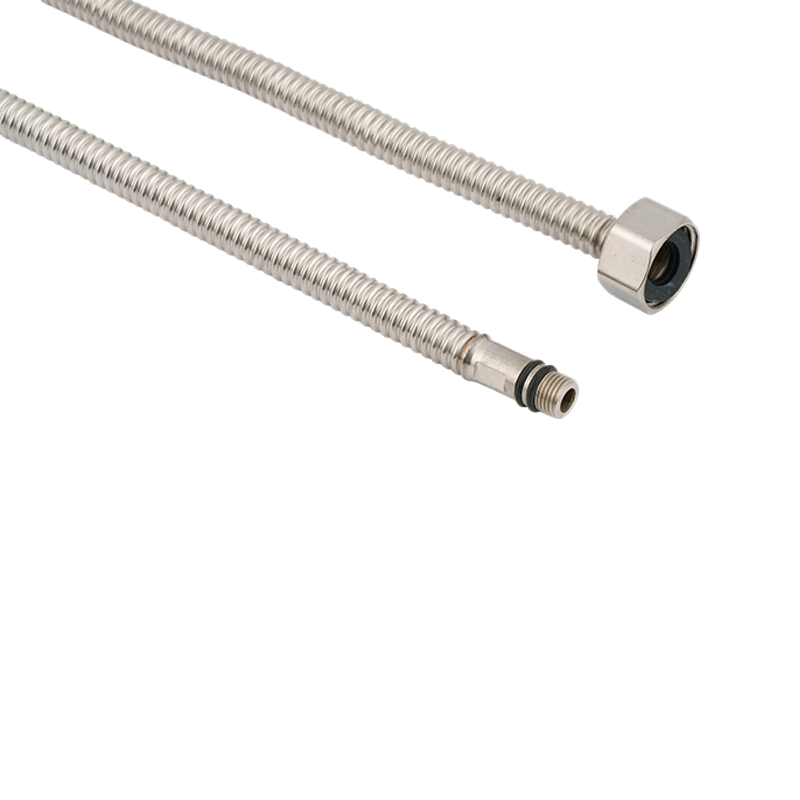
Vibration is a separate problem. Wall-hung boilers, compressors and appliances on lightweight mounts transmit movement into the joint, and a rigid assembly transfers that load straight to the fitting. A corrugated flexible hose with high vibration tolerance absorbs it, which is why the
 Anti-Vibration Stainless Steel Corrugated Flexible Gas HoseCorrugated 304 hose absorbs vibration and pressure pulses for boilers, heaters and confined connections; dual O-ring seals and custom end fittings support varied installs.View Product →
belongs in the range even if it sells in smaller volumes than the standard lengths.
Packaging, Labelling and Container Math
Freight is usually the second-largest line in a wholesale landed cost, and it is decided at the packing table, not at the port. Three details move the number:
- Carton dimensions that match your pallet footprint, so you are not paying to ship air above the load
- Pieces per carton declared accurately, because a 20-foot container is filled by carton count, not by weight
- Labels printed with standard reference, size, length, batch code and production date, so receiving can book stock without opening every box
OEM cartons and private-label printing are routine for us, but they need artwork approval and a print run slot, which is why they belong in the lead-time plan from the start rather than as a last-minute request after the goods are made.
An RFQ Checklist for a First Order
Send these eight points in one message and most reputable factories will return a usable quotation in a single round:
- Size, length and connection type, with a drawing or photo of the mating fittings
- Coating or braid requirement, and the environment it will face
- Test pressure, hold time and the standard your market requires
- Certification documents you need to see, and whether copies must ship with the goods
- Pieces per carton, cartons per pallet, and pallet marking
- Private-label artwork status, if any
- First-order quantity plus expected annual volume, so stock can be reserved
- Delivery window and preferred port or forwarder
Two of those items — annual volume and delivery window — are what separate a factory that holds stock for you from one that treats every order as a one-off. Say them early and the answer you get back will be a supply plan rather than a price list.
Wholesale corrugated gas hose is a repeat-purchase product. The buyer who wins is not the one with the lowest first quotation, but the one whose supplier holds the same length tolerance on order twenty as on order one. If you want a quotation against your own specification, send the length, connection, coating and carton count through our contact page and our team will come back with pricing, samples and a delivery schedule.



 English
 中文简体
 عربى
 Español





 Wholesale Flexible Metal Hose Suppliers